

Enterprise IT services / Technical service solutions
Enterprise Information Technology Service Solutions
IT challenges during construction, upgrades and daily operation need clear requirements, practical designs, specialist implementation and ongoing support. Yuqi Intelligent connects these into an actionable delivery path.
01Why customers need this
A clear path through construction, upgrades and operations
Construction, upgrades and operations often overlap. A complete technical delivery path clarifies current conditions and goals, then connects design, specialist work, integration, handover and continued operation.
Starting with business goals and technical conditions, Yuqi Intelligent prioritizes networking, servers/storage, virtualization, migration, security and backup, keeping decisions, implementation and maintenance connected.
- 01
Construction
New systems, equipment rooms and infrastructure need business objectives, architecture and implementation order in one plan.
- 02
Upgrades and migration
Networking, servers, storage, virtualization and data migration are interdependent; isolated work can leave interface and cutover risks.
- 03
Ongoing operation
Security, backup, changes and incident support do not end at launch. Clear responsibilities and maintenance paths remain necessary.
Confirm scope against project conditions, technical state and both parties' responsibilities.
02Delivery relationships
From technical design to implementation and support
Design, specialist implementation, integration, handover and support follow one business and technical path.
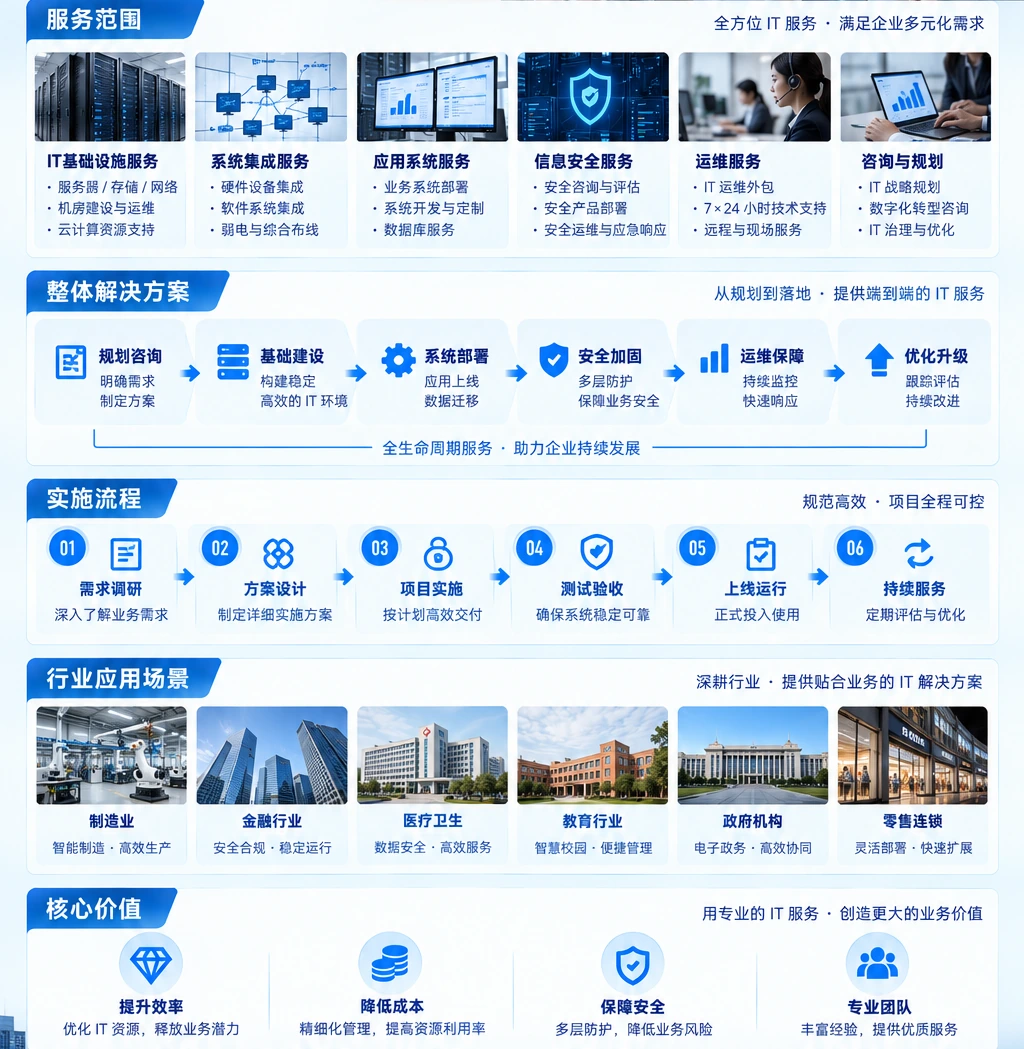
One enterprise IT ticket passes through requirements, assessment, design, implementation, validation/handover and support. Follow-up findings feed new requirements back to intake.
- 01 / RequirementsConfirm requirementsGoals · Current state · Scope
Create a traceable service ticket.
- 02 / AssessmentAssess current stateSite · Systems · Risks
Clarify conditions and priorities.
- 03 / DesignDesign the solutionPath · Boundaries · Schedule
Create an executable and reviewable plan.
- 04 / ImplementationSpecialist implementationConfiguration · Migration · Integration
Implement site work within the agreed scope.
- 05 / HandoverValidate and hand overTesting · Handover · Launch
Complete delivery with results and documentation.
- 06 / SupportOperations supportMonitoring · Changes · Follow-up
Feed follow-up findings into the next requirement.
Split delivery into project phases or connect ongoing support and on-site personnel as needed.
03What Yuqi Intelligent does
Deliver design, implementation and support together.
Within agreed goals and boundaries, Yuqi Intelligent connects requirements, implementation, integration, handover and support, making technical plans work on site and in daily operation.
Requirements and solution design
Review current conditions, dependencies, priorities and responsibilities against construction, upgrade and operating goals to form an executable technical plan.
Network implementation
Configure, integrate and validate network architecture, equipment, links, addressing, access and security coordination.
Server and storage implementation
Deploy and configure servers/storage, prepare migration and verify handover against capacity, performance and redundancy requirements.
Virtualization and migration
Implement virtualization, resource adjustments, migration and cutover validation around the existing environment and business windows.
Security and backup
Configure, inspect and document access control, security policies, backups and recovery requirements.
Integration, handover and ongoing support
Connect testing, handover, changes, incident coordination and support to sustain operations.
04Deliverables and engagement models
Deliver the plan, implementation and support together.
From requirements to specialist work, testing, handover and ongoing support, retain technical evidence, validation results and maintenance access so the organization knows the next step and its owner.
What can be delivered
- Requirements, current-state and implementation-condition records
- Designs, topology, configuration boundaries and implementation plans
- Specialist implementation, migration/integration and validation records
- Handover documentation, operating instructions and support channels
How we can work together
Next step / Next connection
Start with the current construction, upgrade or operating challenge.
Share your environment, goals and time window so we can define the practical design, implementation and support model.