
YUQI / WEB DATA PIPELINE · Custom development based on Firecrawl
Turn websites into
continuously updated data sources
From URL lists and site crawling to clean Markdown and JSON. Yuqi plans a repeatable data workflow for websites, documentation, product catalogs and announcements, with traceable sources and defined delivery formats.
checked individually
Markdown / JSON
Source → Delivery
Cloud / Self-host / Hybrid
01 / Target URL (sample)
02 / Collection scope
03 / Output format
# Product description (sample)
Run the demo workflow to see a simulated extraction result.
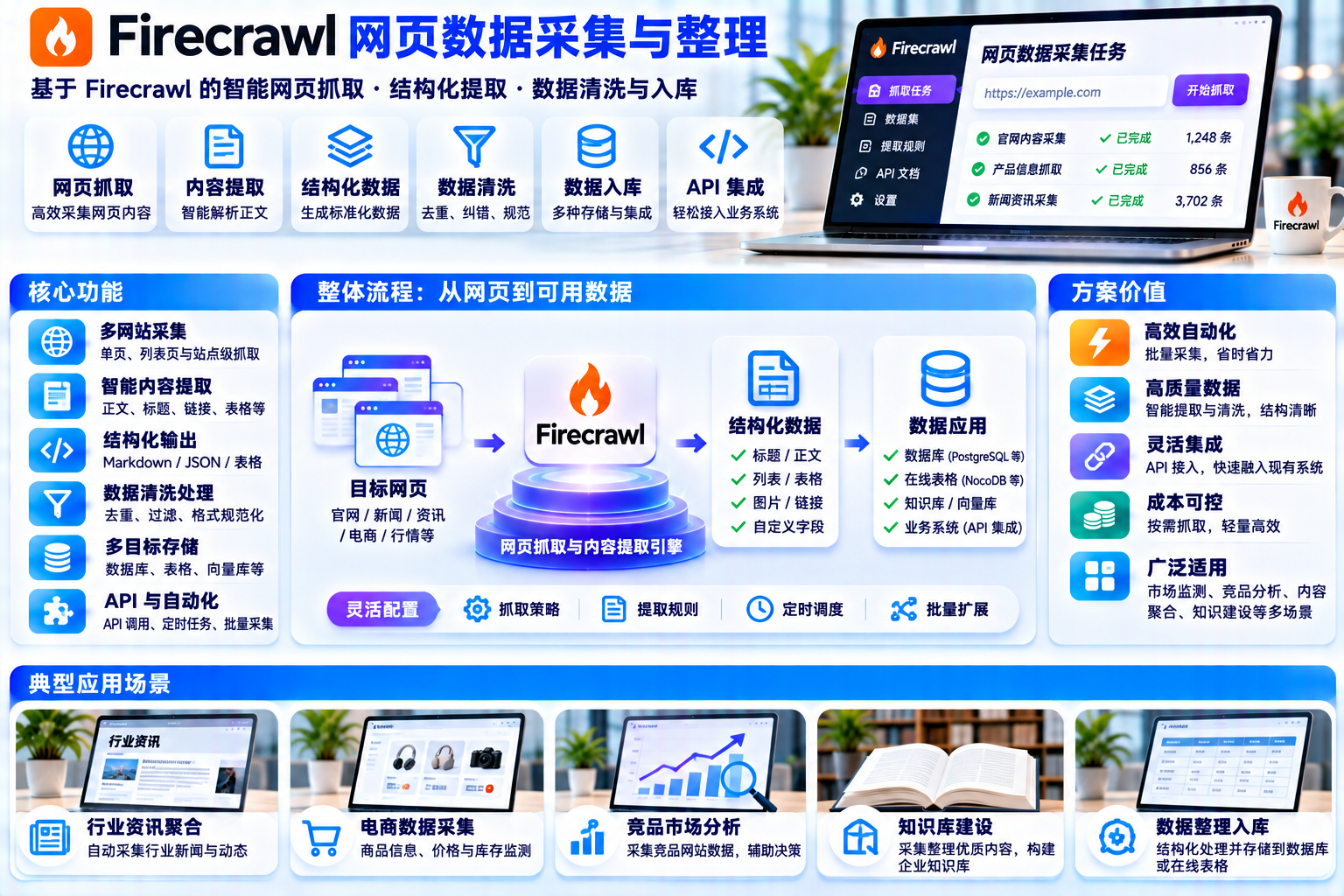
Interfaces, figures and prices are examples. Actual features, licensing and delivery scope are confirmed for each project.
01 / CAPABILITY MAP · Official sources reviewed
Included engine features and custom implementation
Firecrawl is the collection engine. These groups distinguish engine features from custom work. Availability depends on the version, deployment path and supporting services. This distinction defines implementation effort and acceptance scope.
Single-page Scrape
Convert a URL to Markdown, HTML, screenshots or structured JSON, with content-only options.
Official capabilitySite-wide Crawl
Discover pages through sitemaps and recursive links, with limits, discovery depth and path filters.
Official capabilityURL discovery with Map
Enumerate site URLs to confirm the collection scope before crawling.
Official capabilityAsynchronous Batch
Process URL batches asynchronously and retrieve results through status checks; capacity depends on configuration.
Official capabilityContent & output formats
Markdown and HTML output, plus schema-based structured JSON extraction.
Official capabilityTask status & callbacks
Status polling, watchers and webhooks for started, page and completed events, with signature verification.
Official capabilitySearch & result extraction
Search can return extracted result content; providers and self-hosted configuration need validation.
Requires configurationModel-assisted structure
Extract JSON against a schema. Configure model providers, file parsing and advanced extraction for the chosen deployment.
Verify per deploymentSite-specific cleaning
Define content selectors and remove navigation, footers, ads and template noise for each source.
Custom developmentContent-level deduplication
Define content hashes, similarity thresholds and canonical merging, with human review for exceptions.
Custom developmentScheduled incremental updates
Set schedules, detect changes and selectively recollect changed pages for an updatable data source.
Custom developmentData quality checks
Check field completeness, missing values and abnormal pages, producing reviewable QA results.
Custom developmentTask orchestration & audit
Track runs, retries, retention and access records to trace each delivery.
Custom developmentPackaging & versions
Define Markdown and JSON folders, export conventions, snapshots and change lists.
Custom developmentDownstream integration
Define write interfaces, field mappings and chunk metadata. Knowledge retrieval is a separate implementation.
Custom developmentAccess & collection policies
Review robots.txt and site terms, allowlists, collection rates and access audit requirements.
Custom developmentignoreQueryParameters avoids URL variants with different query parameters, rather than content duplicates. A completed crawl does not guarantee every page was covered. Business cleaning, content deduplication and update governance are separately scoped work.
02 / DATA PIPELINE · Pipeline visualization
Web sources → Extraction → Cleaning & preparation → Delivery & integration
Each stage has reviewable inputs and outputs. The engine handles collection and extraction; site-specific cleaning is custom work. Delivery defines the recipient, format and update cadence.
Web sources
Agree what to collect and exclude: URL lists, domains, path filters, update frequency and access requirements.
Collection & extraction
Collect single pages, sites or URL batches. Render JavaScript pages where needed and return Markdown, HTML or schema-based JSON.
Cleaning & preparation
Remove navigation, footers and ads; deduplicate by content hash or similarity; validate fields; mark new and changed pages for incremental updates.
Deliver data / Connect a knowledge base
Deliver Markdown and JSON packages with a task ledger, or write to an agreed downstream system. Building the knowledge base is outside this stage.
Collection produces usable source material. Retrieval and question answering still require the separate knowledge-base work shown here.
Scope boundaryThis service: collection & preparation
Separate work: RAG knowledge base
RAG DATA READINESS · Data preparation
Prepare material for RAG, with a clear handoff boundary
We prepare source material for downstream ingestion. These six deliverables remain part of collection and preparation; they do not constitute a knowledge base.
Traceable sources
Include source_url, site identifiers and collection timestamps for attribution and review.
Content structure
Clean Markdown retains heading levels for downstream semantic chunking.
Structured fields
JSON fields such as name, SKU, specifications and update time can serve as retrieval metadata.
Deduplication & versions
Merge duplicate pages and retain version markers to avoid repeated ingestion.
Incremental change markers
Identify new, changed and invalid pages to support batch updates.
Delivery contract
Agree folder conventions, batch identifiers and write interfaces for downstream ingestion.
03 / PRODUCT SURFACE · Interface prototype
Daily work revolves around tasks, outputs and rules
Four local prototype views show task filtering, output formats and rule toggles. They illustrate a potential delivery interface and have no connection to a live service or database.
| Task ID | Source (sample domain) | Mode | Pages | Output | Status | Time |
|---|
# Raw page noise (illustration)
Home  Products  Docs  Pricing  Sign in  ▸
 ## PX-200 industrial gateway description
PX-200 supports redundant links and remote maintenance…
Related reading | Products | Copyright ©
Ads / Breadcrumbs / Footer / Cookie notice
# PX-200 industrial gateway
"category": "Network equipment"
"sku": "PX-200"

## Specifications
- Redundant link switchover: < 200 ms
- Operating temperature: -20 to 65 °C
- Remote maintenance: supported

 --- source: docs.example.com/product/px-200
--- crawled_at: 2026-11-15 09:42 (sample)
{
  "type": "object",
  "properties": {
    "product_name": { "type": "string" },
    "sku":          { "type": "string" },
    "specs":        { "type": "array" },
    "updated_at":   { "type": "string" }
  }
}
{
  "product_name": "PX-200 industrial gateway" ,
  "sku": "PX-200",
  "specs": [
    "Redundant links < 200 ms" ,
    "Operating temperature -20 to 65 °C"
  ],
  "source_url": "docs.example.com/…",
  "updated_at": "Sample timestamp"
}
04 / DEPLOYMENT · Deployment
Three delivery paths, chosen by data boundaries
Deployment determines the data path, operating responsibility and license obligations. These are options; this page performs no deployment.
Firecrawl Cloud API
Use the managed API without operating the infrastructure. Cloud also provides capabilities beyond the default open-source stack.
- Fits: fast validation, varied sources and fluctuating demand
- Data path: processed by a third-party service
- Trade-off: metered usage and data-boundary review
Self-hosted Docker Compose
Run the selected release using SELF_HOST.md and its Compose file. Plan customer-side storage and separately review external sites, models and proxies. The customer operates supporting services.
- Fits: infrastructure control and an operations team
- Components: API / Workers / NuQ PostgreSQL and supporting services
- Trade-off: upgrades, scaling and monitoring
Hybrid: separate collection from ingestion
Choose cloud or self-hosted extraction, then keep cleaning, deduplication, task records and delivery in the customer environment.
- Fits: existing data platforms and gradual migration
- Boundary: explicit ownership of cleaning and scheduling
- Trade-off: clear interfaces and data contracts
AGPL-3.0,Some SDK and UI packages use MIT; verify each package ; official deployment references include SELF_HOST.md、docker-compose.yaml and the Self-Hosting Guide. Components and variables must match the selected release. Firecrawl respects robots.txtby default. Users remain responsible for site policies, privacy obligations and terms of use. Review AGPL-3.0 obligations before providing a modified network service ; this page is not legal advice.
05 / DELIVERABLES · Deliverables
The deliverable is a repeatable data workflow with defined handover assets
Sources, rules, task records and update plans have reviewable outputs. Final implementation and acceptance scope must be agreed for the project.
Source list & collection configuration
URL lists, domains, path filters and collection cadence.
Site cleaning rules
Content selectors, excluded noise, field mappings and exception handling.
Structured dataset
Markdown and JSON, with source URLs and collection timestamps.
Deduplication & QA results
Duplicate decisions, changed pages and review items for spot checks.
Task records & execution logs
Run status, page counts, failure reasons and rerun history.
Refresh & integration plan
Incremental updates, folder conventions and downstream write interfaces.
06 / WORK SCENARIOS · Business scenarios
From copying pages to maintaining fresh data
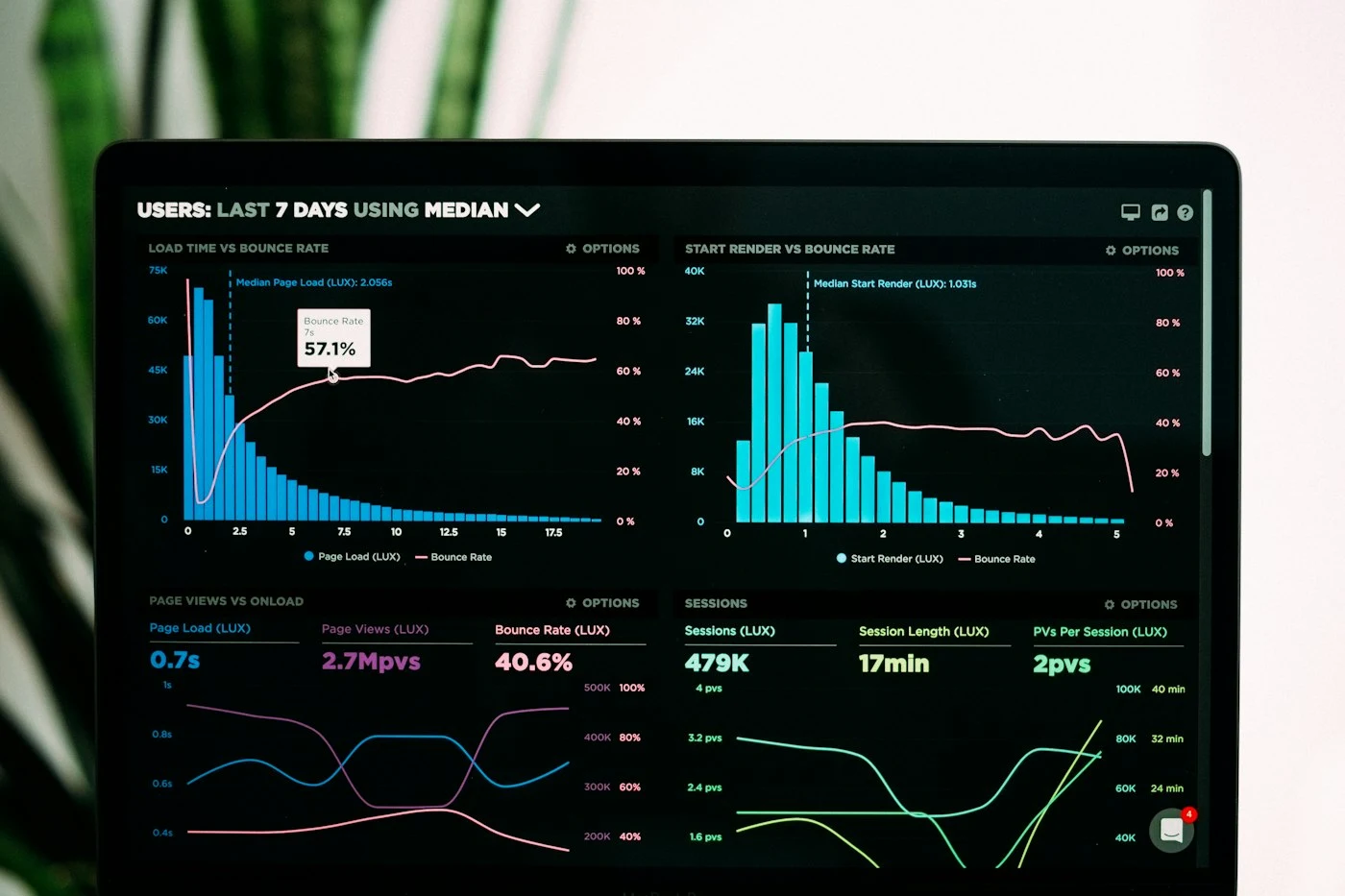
Common starting points include scattered product documentation, recurring notice reviews and stale knowledge-base material. Stock photos illustrate collaboration, rather than customer projects.

Agree included pages, excluded paths and update frequency before running tasks.
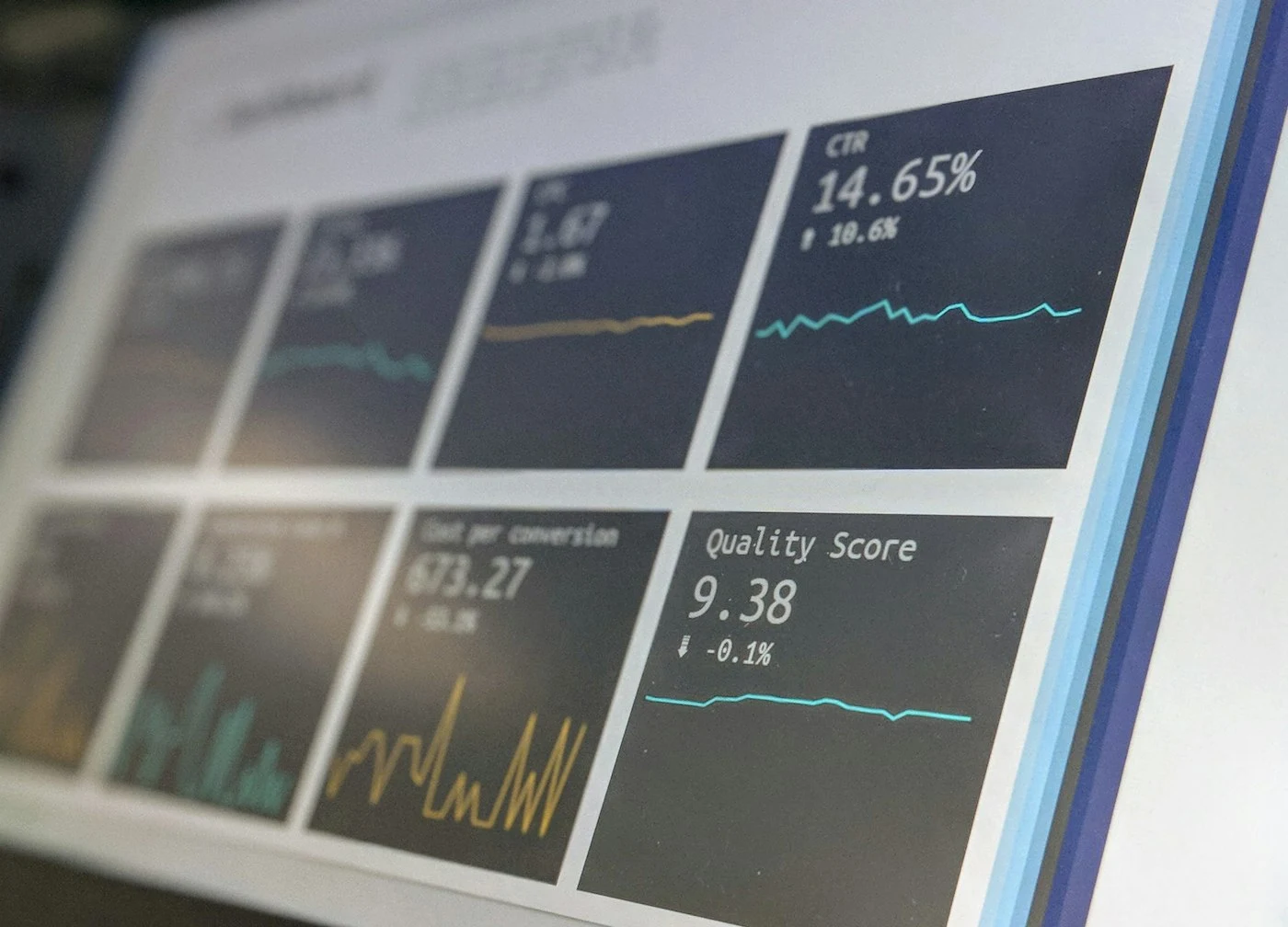
Check noisy pages, duplicates and missing fields, then record exceptions as rules.

Deliver agreed packages and task records, or connect a customer-designated system.

Bring new and changed pages into the dataset on an agreed schedule. Update governance is custom implementation work.
07 / VALUE · Less manual preparation
Replace repetition with a maintainable data process
This comparison describes workflow changes, not measured business outcomes. Results depend on source structure, content quality and the agreed update cadence.
Manual preparation: common starting point
Collection workflow: proposed approach
NEXT STEP / Discuss your requirements
Start with sources and update frequency,
then plan deployment and integration
Begin with a URL list. Agree source structure, cleaning, deduplication and formats, then define implementation scope. RAG knowledge-base construction is evaluated separately.