
Site subsystems
Access control / Parking / Video security
Lighting and HVAC control / Environment and energy data
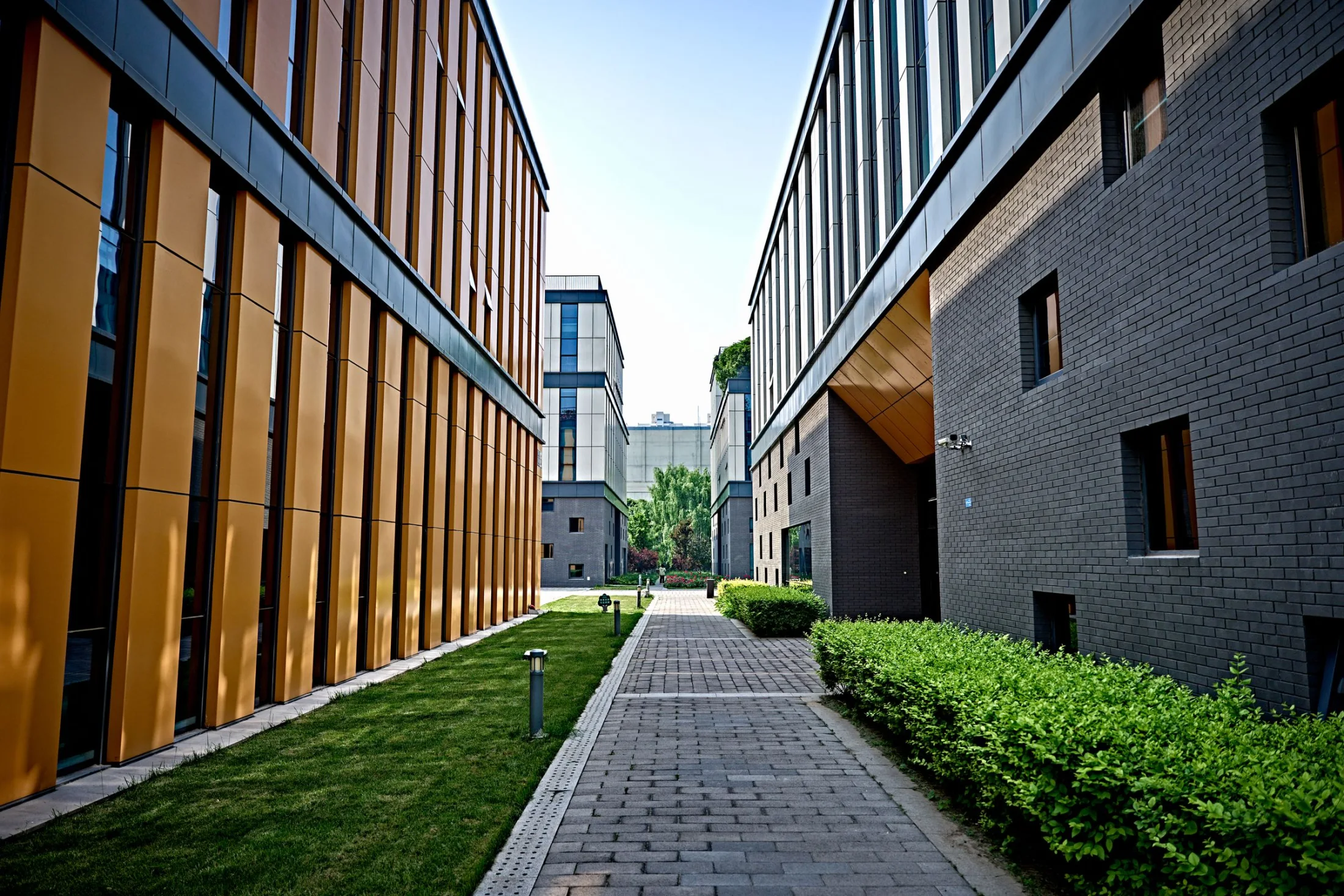
Low-voltage and intelligent systems / Buildings and campuses
From entry access to building equipment, security alerts to property-service tickets, Yuqi Intelligent organizes separate low-voltage subsystems into a manageable operating environment, delivering design, equipment, installation, integration, upgrades and support.
Clear system roles, documented interfaces and assigned event owners.
Why it matters
Smart buildings and campuses manage relationships between people, vehicles, spaces and facilities, not just a dashboard of devices. Networks and cabling connect access control, parking, video and building controls; authorized platforms aggregate states and events.
Separate management systems, unclear device locations, unassigned alerts and repeated construction complicate operations. Define independent functions and shared information first, then interfaces, segmentation and workflows, establishing boundaries for both new builds and upgrades.
How the architecture works
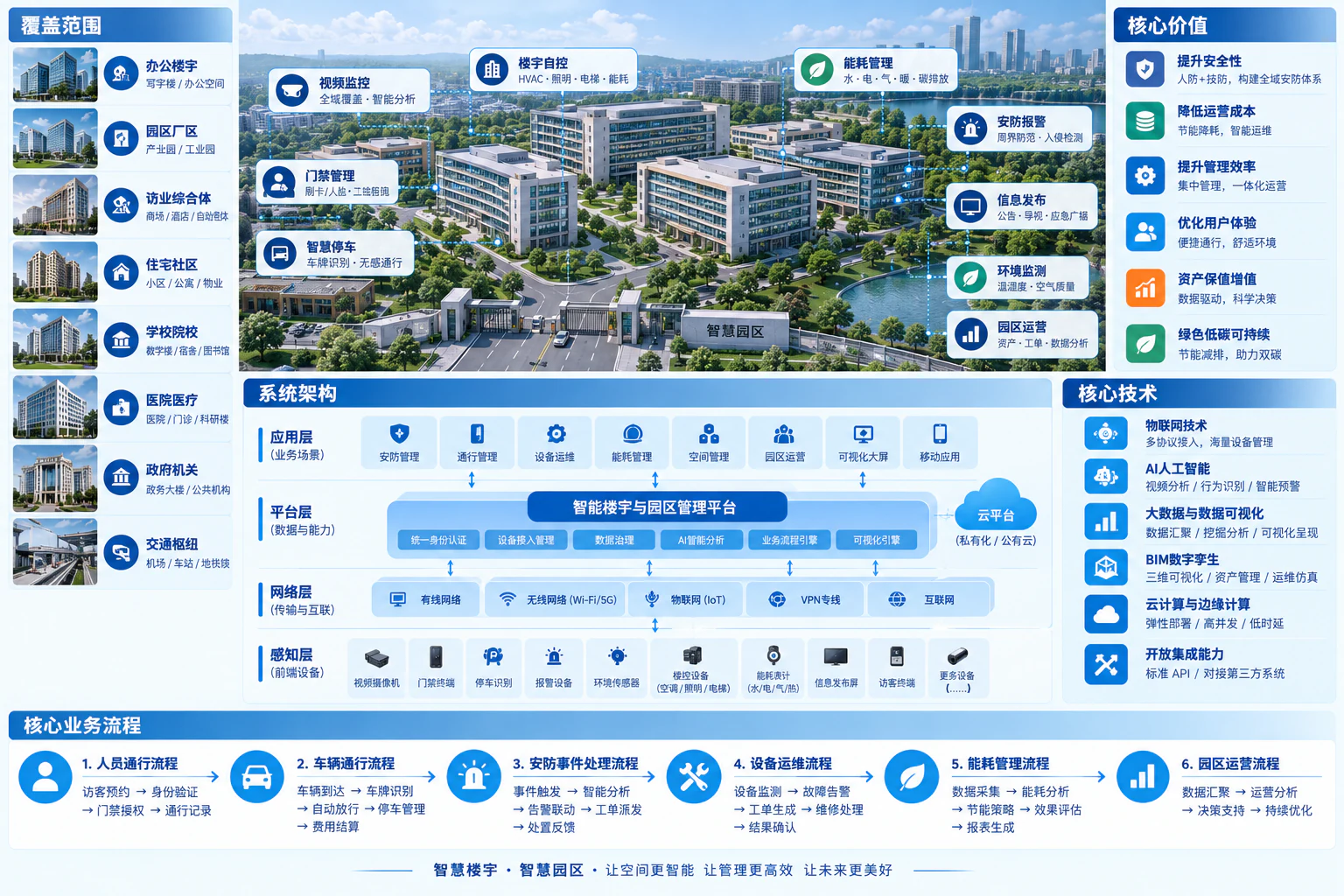
Local controllers enforce site rules; segmented networks connect systems. Platforms read state, receive events or send authorized commands through validated interfaces. Alerts enter human response workflows; test which local functions remain when the platform is unavailable.
Access control / Parking / Video security
Lighting and HVAC control / Environment and energy data
Structured cabling / Switching and security boundaries
Gateways and protocol integration / Time synchronization
Asset inventory / Permissions / Event correlation
Alert dispatch / Human confirmation / Response records
Device event → Rule-based alert → Human confirmation/dispatch → Treatment and records. Authorized commands return to the appropriate subsystem; the platform integrates only validated interfaces.
Local control does not depend on the display wall. Fire-safety, elevators and other specialist systems retain independent safety duties; coordination requires specialist approval. Building control, energy monitoring, AI and digital twins are optional, not default inclusions. Animation shows relationships, not measured speed or performance.
Coordination does not replace subsystems
A campus platform need not control every function of every device. Networking, access, surveillance, parking and building controls retain their roles while the platform links devices, spaces, people and events.
Access controllers, parking equipment and building controls follow local rules. Define retention and recovery of critical functions during network or platform failures.
Confirm readable states, permitted commands and interface ownership. Standardize device IDs, building locations and event timestamps so records match across systems.
Connect facility alerts, responsible people and results through work orders. Dashboards show status; management happens through dispatch, response and review.
Receive device state/location and identify duplicate alerts and affected areas.
Assign responders by building, system and duty role.
Repair on site or perform authorized remote actions, recording work and replacements.
Confirm restored status, link repair records and retain follow-up inspection items.
Frequently asked questions
Check models, protocols, APIs, licenses and versions using representative integration tests. State visibility does not establish full control support; retain native access or separately upgrade incompatible components.
Not always. Mature subsystems may serve a small building; assess unified management for multiple buildings or frequent cross-system events. Scope follows users, maintenance capability and budget.
No. Building automation retains local controls, while fire-safety and elevator systems retain their safety logic. Relevant specialists jointly confirm integration, read/control permissions and coordination conditions.
Test device availability/inventory, permissions, notifications, human response and traceability in agreed scenarios, including local functions during outages. Measure energy or efficiency improvements against actual baselines without preset benefit percentages.
Yuqi Intelligent builds and upgrades low-voltage systems for offices, headquarters and industrial campuses, combining networking, security, access and facilities in one plan. Handover covers equipment, wiring, interfaces, permissions and responsibilities, not software alone.
Survey buildings, floors, entrances, equipment rooms and device locations; review people/vehicle flows, existing systems and construction conditions. Deliver zoning, locations, interface lists, budgets and phasing recommendations.
Supply networking, video, access, parking and agreed control/sensor equipment; install cabling and devices, configure networks and test subsystems. Select by environment, compatibility and maintainability, not unit price alone.
Integrate inventories, accounts, permissions, events and notifications. Test visitor access, video correlation, facility dispatch and authorized actions, defining API licensing, data fields, failures and logging ownership.
Assess retained equipment/platforms, test integration before phased migration, and resolve offline devices, links, permissions and coordination issues. Provide inspections, backups, training and agreed remote/on-site support.
Next step / Site assessment
Share site scope, existing systems, workflows to improve and construction plans so Yuqi Intelligent can survey retained equipment, implementation scope and deliverables.