DISASTER RECOVERY · BACKUP & RECOVERY

Backup and disaster recovery
A tested path back to service

Yuqi helps you turn recovery objectives (RTO / RPO),production and replica boundaries, off-site environments and authorized failover into executable systems and documentation. We can help scope multi-site architecture, disaster recovery, data restoration, high availability (HA), from assessment and design to recovery drills.

Metrics, logs and scenarios on this page illustrate a design. Actual RTO, RPO, drill cadence and delivery scope depend on your systems, network and project agreement.

≤ 15min
Example core RTO
Target time from outage to restoration
≤ 5min
Example critical RPO
Acceptable data loss window
≥ 99.99%
Example availability target
Consider HA and DR together
≥ 4per year
Example drill cadence
Tabletop, partial, full and failback
Technology options / Compatible stack
VMware vSphere
Hyper-V
KVM / OpenStack
Oracle RAC
MySQL Group Repl.
Dameng DM8
PG BDR
Kafka MirrorMaker
Dell EMC DD
NetApp SnapMirror
Huawei OceanStor
Veeam / Commvault
Veritas NBU
Zabbix / Prom.
Huawei Cloud / Alibaba Cloud
Kylin / UnionTech
SECTION 01 · ARCHITECTURE

Three-site recovery architecture

This design example combines production, metro recovery and remote recovery sites with synchronous replication, asynchronous replication and backup archives. Application HA, database replication, storage failover and orchestration support measurable RTO and RPO targets, backed by a failover runbook.
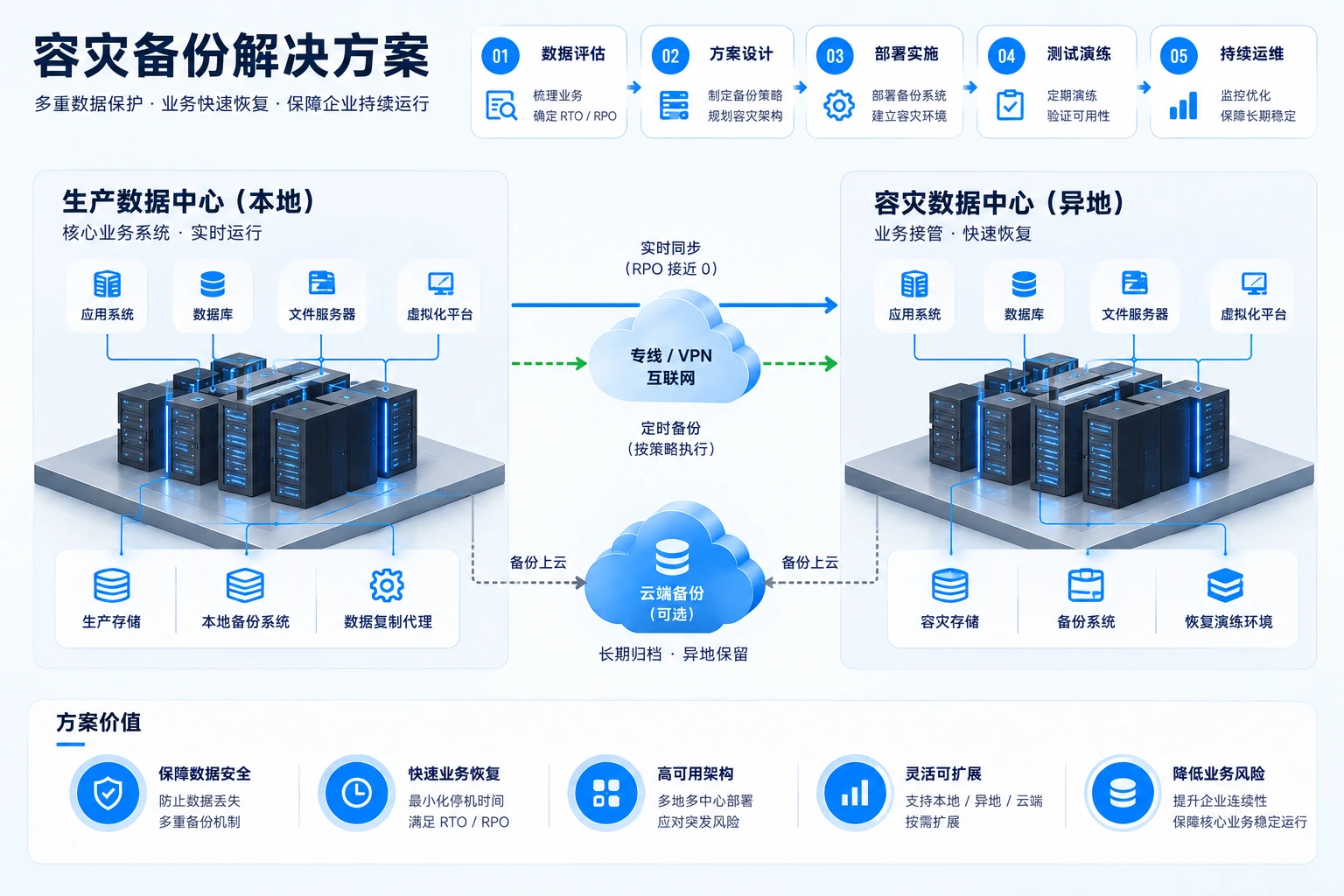
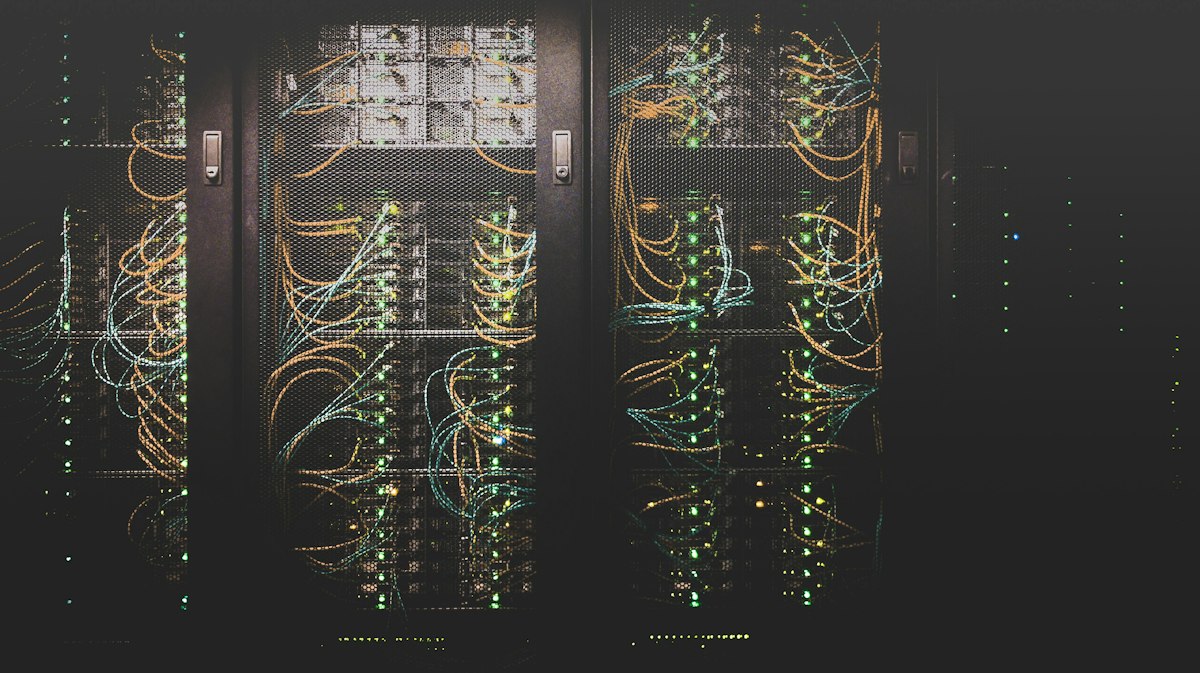
DIAGRAM 02 / 01 · Three sites and their connections
DIAGRAM 02 / 02 · HA failover orchestration and sequence
Disaster recovery architecture diagram showing local production, an off-site recovery centre and optional cloud backup
Local production and independent backups connect to off-site recovery over a private link or VPN. Cloud backup is optional. The diagram retains its original Chinese labels. Near-zero RPO is an example that depends on synchronous replication, network conditions and application consistency.
Production data centre racks SITE A · PRODUCTION · ILLUSTRATIVE RACKS
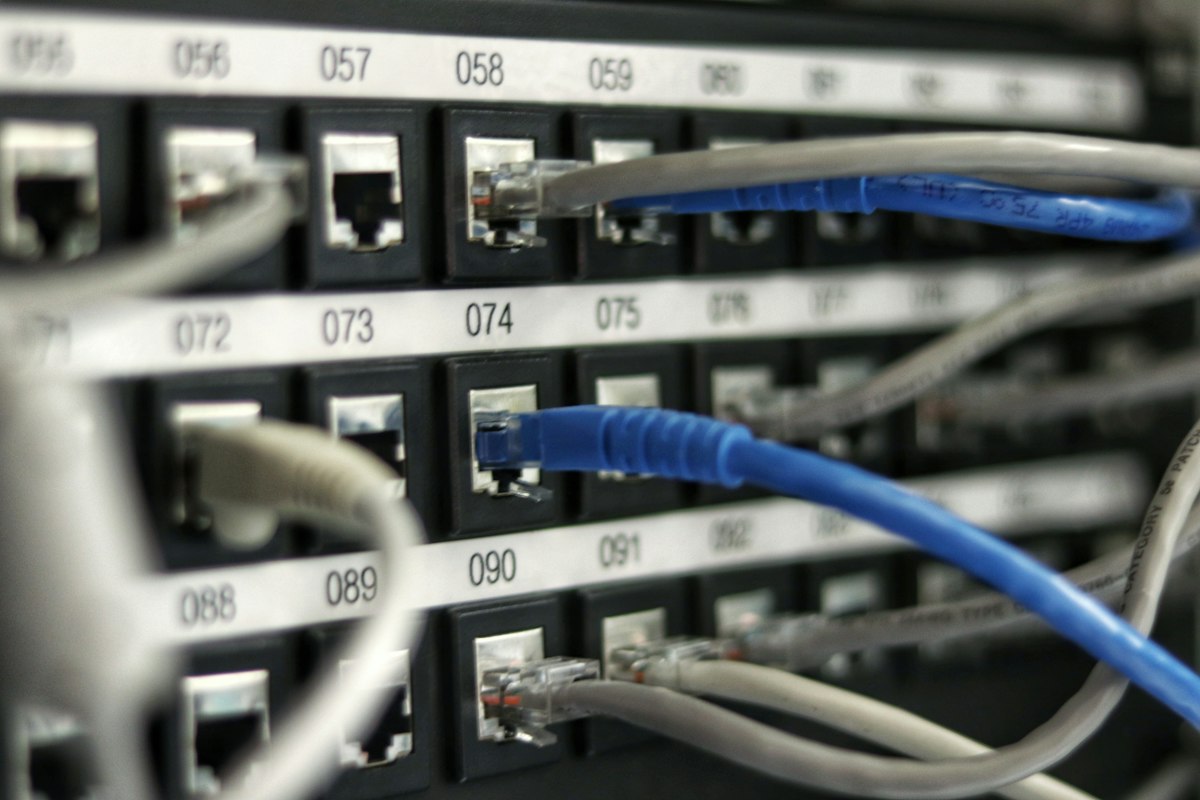
Metro recovery network SITE B · METRO RECOVERY · ILLUSTRATIVE CABLING

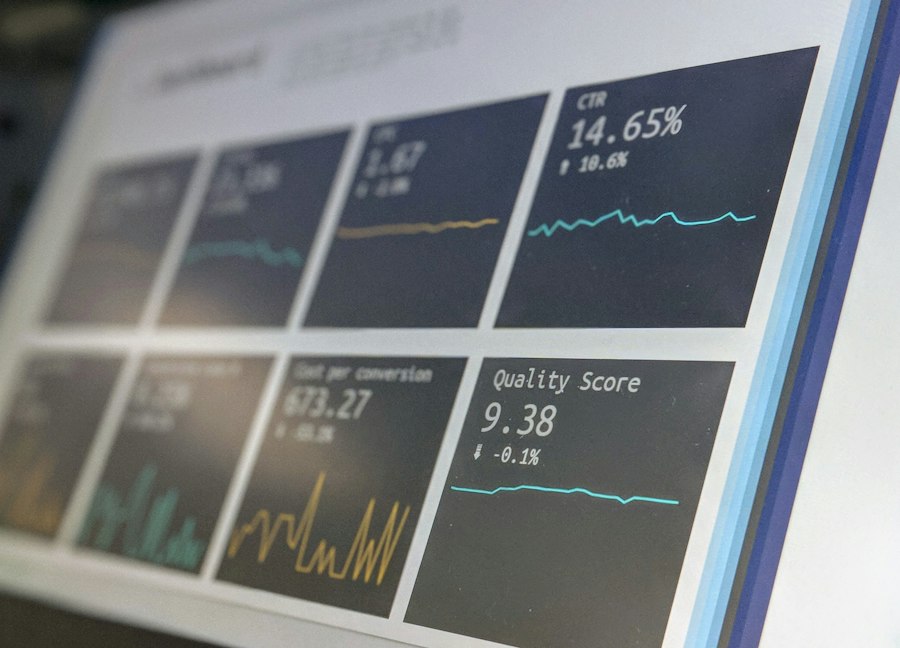
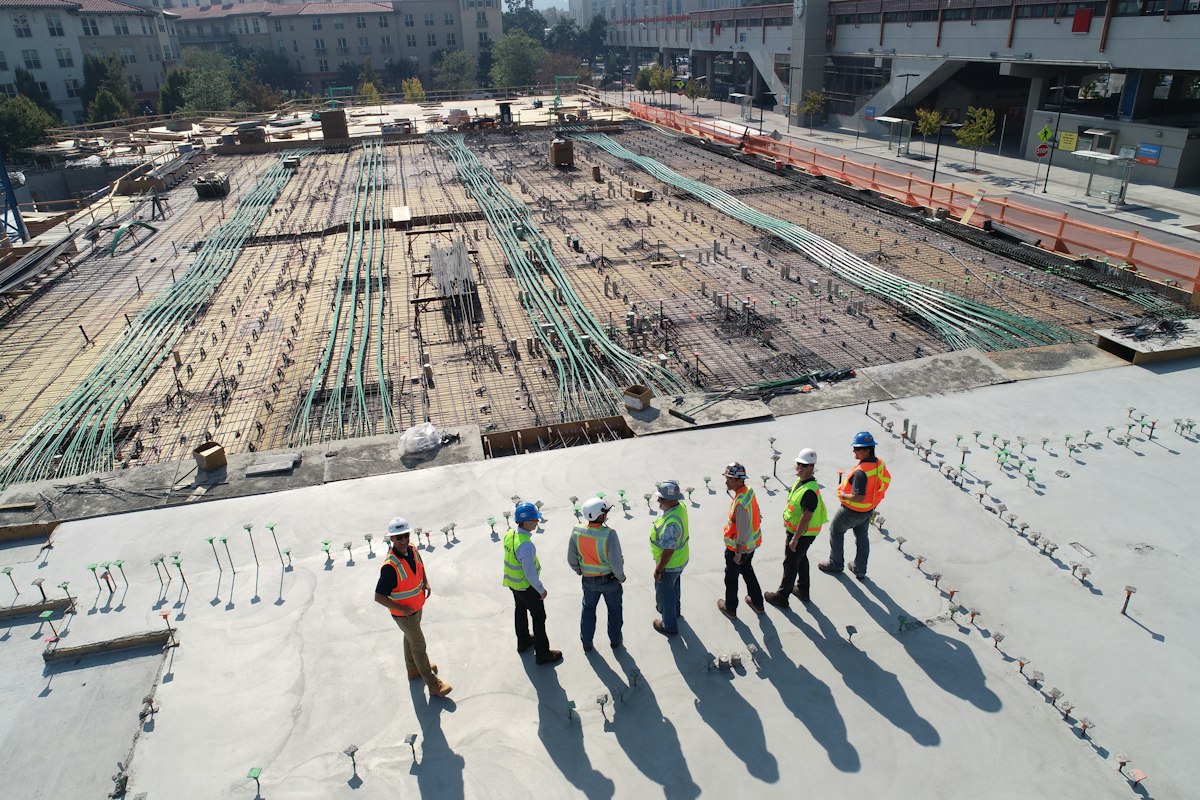
City at night as a remote-site illustration SITE C · REMOTE RECOVERY · ILLUSTRATIVE VIEW
LAYER 01
Application HA
Active-active clusters, canary releases and circuit breakers
LAYER 02
Database replication
Sync or async replication with quorum against split brain
LAYER 03
Active-active storage
Mirrored writes, quorum witness and snapshots
LAYER 04
Network failover
GSLB or DNS weights, private links and backup VPN
LAYER 05
Security and encryption
TLS in transit, immutable backups and role-based access
LAYER 06
Orchestration and audit
Runbooks, exercise trails and retained records
SECTION 01.b · FAILOVER DECOMPOSITION

Time and verify each step of RTO

Detect the failure, obtain authorization, execute failover, validate data and plan failback. Record the checkpoints and measure each phase during a drill, so you can see where to improve recovery time.

TIMELINE · CORE SYSTEM Total RTO · 14 min 12 s
01 · Failure detection
0:48s
02 · Authorization
1:42s
03 · DNS / GSLB
2:36s
04 · Application startup
3:24s
05 · DB promote
4:31s
06 · Data validation
6:48s
07 · Failback
11:03s
Total
14:12
Start timing
Alert at t=0
Confirm the alert before starting the clock or triggering failover
Validation scripts
100%
Replay key business flows and check data, with a stop on error
Authorization policy
3 / 5
Multiple approvers, session recording and tamper-resistant audit
Archive results
≤ 24 h
Record drill results and carry improvements into the next cycle
Replication policy
Sync / async
Metro sync and remote async where bandwidth supports them
Automated failover
≤ 60 s
Health probes, quorum and authorized runbook triggers
Witness quorum
3 / 5
Multi-node quorum prevents split brain, with retained failover records
Canary rollout
1 / N
Validate with a small share of traffic and plan rapid rollback
SECTION 01.c · FAILURE MATRIX

Incident scenarios and recovery paths

Logical mistakes call for a clean recovery point, ransomware may require restoration from immutable backups, and a data centre outage may require a site failover. Review the available paths during assessment before committing resources.

SCENE MATRIXExample RTO / recovery option / verification
IncidentFirst recovery optionRTOValidation
Accidental deletion or logical errorPoint-in-time restore and binlog replay≤ 30 minRestore point
Ransomware encryptionForensic restore from immutable backup≤ 4 hReadable sample
Database corruptionPromote standby and validate≤ 15 minData consistency
Hardware or media faultActive-active takeover or replacement≤ 10 minTakeover test
Data centre outageMetro site failover≤ 30 minService test
Regional outageRemote site failover≤ 4 hCross-site test
Cloud configuration errorSnapshots and cross-cloud backup≤ 1 hRestore point
DESIGN RULEThree recovery options

For each workload, identify a primary, secondary, last-resort recovery option. Set trigger conditions and who can authorize it so teams can act according to an agreed plan.

A · PRIMARY
Local HA and replica takeover
B · STANDBY
Metro failover / async path
C · REMOTE
Remote recovery and intercity link
D · COLD
Remote cold backup and offline media
immutable backups
WORM
Ransomware resilience and routine restore sampling
Layered recovery
3 layers
Metro recovery, remote recovery and offline media
SECTION 02 · DATA RECOVERY

Data recovery and media failure response

Accidental deletion, ransomware, logical corruption and physical media failure can happen at any time. Plan for specialist recovery, media handling and qualified engineers. Scope response arrangements and confidentiality to give your recovery plan an extra layer of resilience.
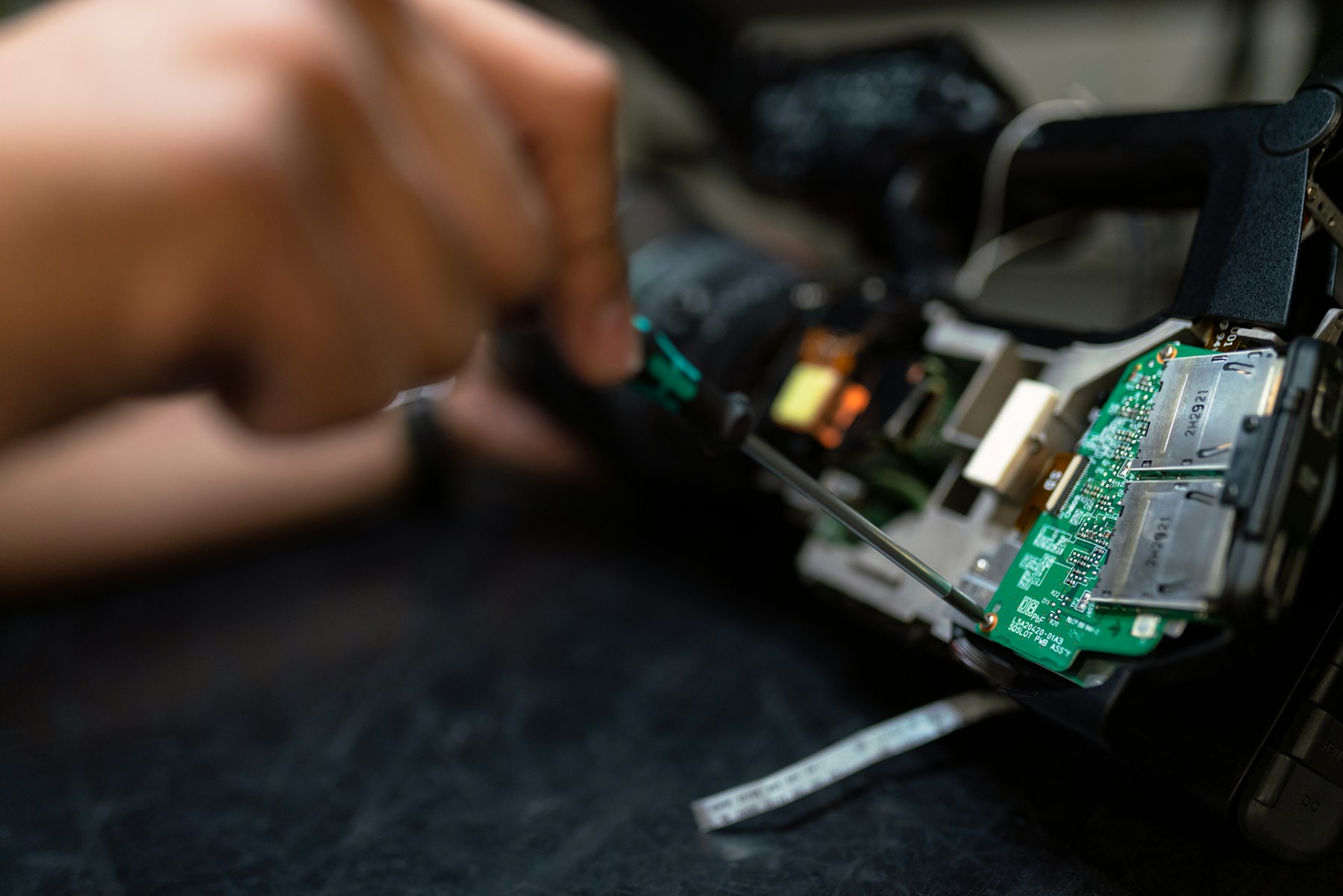
Data recovery lab illustration PHOTO 03 · ILLUSTRATIVE MEDIA INSPECTION

Circuit board Electronic storage media
Monitoring Monitoring example
Forensic imaging Forensics and imaging
Multiple media types Multiple media types

01 · RESPONSE
Response planning
Agree on-site support and remote triage arrangements during assessment
02 · COVERAGE
Media assessment
HDD / SSD / NVMe / RAID / tape / cloud snapshots, assessed per case
03 · ENV
Media handling
Use a suitable recovery environment and preserve an image where possible
04 · CERT
Engineer requirements
Confirm storage, backup and evidence-handling requirements for the incident
Team
RECOVERY TEAM · SUPPORT MODEL

Define who handles storage, databases and forensic evidence. Confirm support hours and confidentiality for incidents such as ransomware, accidental database deletion, physical media damage. Coordinate recovery and failover in parallel when appropriate.

NDA · Confidentiality Forensic imaging Ransomware response Emergency response
Incidents
Triage
Data incident types
Validation
Verification
Media recovery validation
Media
Media assessment
Supported media to assess
Platforms
Platform review
Database and operating system scope
Response
Support
Coordinate on-site support or remote triage
Confidentiality
Confidentiality
NDA and audit trail as agreed
SECTION 03 · DRILL & RUNBOOK

From tabletop drills to failover and failback

Start with four types of exercise: tabletop exercises, partial failover, full failover, failback validation. Each drill uses a runbook, timing checkpoints, an activity log, a report and a shortlist of improvements.

Monitoring screen PHOTO 04 · ILLUSTRATIVE DRILL CONTROL ROOM
DRILL LOG · SAMPLE FULL FAILOVER DEMO

01Confirm authorization and recovery objectives

02Verify the replica and recovery point

03Shift traffic under the runbook

04Validate data and critical workflows

05Record failback checks and drill results

SWITCH RUNBOOK · SAMPLE FAILOVER CHECKLIST v 4.2
01Set up the command channel and confirm approvers3 of 5 approvers ready0:00
02Freeze production writes and notify business ownersFinal check: orders paused for 30s0:12
03Shift GSLB weights and lower DNS TTLTraffic routed to Site B0:48
04Promote the standby database to primaryConfirm redo has been applied1:34
05Start the application cluster and check healthAll four nodes ready3:21
06Run validation and replay critical transactionsOrder, payment and reconciliation checks passed6:08
07Exercise failback and restore productionObserve for 30 minutes before failback36:11
08File the report and assign improvementsCompare RTO against the previous drill42:00
DRILL CADENCE · SAMPLE YEAR
Q1 · Tabletop exercise
3 h
Walk through change scenarios
Q2 · Partial failover
4 h
Non-critical workloads
Q3 · Full failover
8 h
With an agreed outage window
Q4 · Failback validation
6 h
Review improvements
Monthly
2 h
Test replication links
Weekly
1 h
Sample backup verification
Daily
auto
Health probes and links
As needed
2 h
Ransomware or deletion response
Quarter end
4 h
Joint cross-site drill
Before go-live
2 h
Drill for new systems
After changes
auto
Retest affected flows
Audit period
4 h
Practise evidence collection
SECTION 04 · DELIVERABLES

Seven sets of audit-ready deliverables

For each phase, specify the owner, how it is accepted, where it is filed. These records support compliance review, internal change review, timely failover.

Phase
Deliverables
Owner
Acceptance and filing
01DISCOVERY
Current-state assessment and business impact analysis (BIA)Critical workloads, dependencies and exposure
Yuqi and client business ownersJoint sign-off
Review together and file the resultsdocumentationBIA
02DESIGN
RTO / RPO tiers and DR architecture designTiered by business criticality, A / B / C
Yuqi architecture teamIndependent review
Technical review and versioned filingDesignRTO/RPO
03BUILD
Topology, baseline and failover runbookAuthorization, triggers, steps and rollback
Yuqi delivery and client operationsTwo-person review
Configuration review and drill validationBaselineRUNBOOK
04DRILL
Drill plan, timing report and improvement listTabletop, partial, full and failback
Yuqi and client business ownersJoint exercise
Business owner approval and next-cycle actionsImprovementstime
05RUN
Operations guide, escalation matrix and monitoring setupSupport hours and escalation route as agreed
Yuqi and client operationsHandover
Verify monitoring and agree a drill cadenceGuide7×24
06AUDIT
Compliance material, audit report and drill registerRelevant local, industry and internal requirements
Assigned compliance leadsQuarterly filing as agreed
Spot checks and traceable recordsComplianceRegister
07IMPROVE
Annual review and capacity or performance trendsCapacity options and priorities for the next year
Assigned technical leadsManagement review
Confirm priorities for the next cyclereviewTrends
SECTION 04.b · WHAT YOU GET

What clients receive

01 · RECOVERY TARGET
RTO / RPO targets for sign-off
A workload-tier and recovery-target matrix for confirmation by the business owner.
02 · ARCHITECTURE
A topology that supports handover
Sites, data paths and failover dependencies in a shared reference.
03 · EXECUTION
A runbook you can test
Failover, off-site recovery and failback steps with timings and verification checkpoints.
04 · MATERIAL
Seven sets of project records
BIA, design, baseline, exercises, operations, compliance and review in one organised set.
05 · TEAM
Data recovery fallback
Agree the route for media recovery, forensic imaging and escalation.
06 · CONFIDENCE
A plan stakeholders can review
Give operations, business leaders and reviewers a shared record of what to recover and who decides.
SECTION 05 · INDUSTRY SCENARIOS

Recovery requirements across six industries

Requirements for RTO / RPO, Compliance, data residency vary by sector and must be assessed for each project.


Healthcare
SCENE 01
Healthcare
Recovery priorities for HIS, PACS and electronic medical records
RPO ≤ 5minSecurity requirements as applicable
Manufacturing
SCENE 02
Manufacturing
Coordinate MES and SCADA recovery with production lines
RTO ≤ 30minOT / IT segmentation
Financial services
SCENE 03
Financial services
Prioritise trading, settlement and risk systems
RTO ≤ 5minJR 0027
Education
SCENE 04
Education
Plan for enrolment, academic systems and campus services at peak periods
Elastic capacityHybrid cloud
Retail
SCENE 05
Retail
Support stores, e-commerce and loyalty systems through seasonal peaks
Active-activeCanary failover
Public sector
SCENE 06
Public sector
Assess data residency, security and cryptography requirements
Domestic platform compatibilityApplicable security classification
SECTION 06 · ENGAGEMENT PATH

Six steps from assessment to recovery drills

STEP 01 · SITE ASSESSMENT
Map assets and dependencies
Interview stakeholders and document critical workloads and dependencies
  • Business impact analysis (BIA)
  • Existing backups and replicas
  • Initial exposure assessment
STEP 02 · TIERING
Agree RTO / RPO targets
Record business and management approval of recovery objectives
  • Business tiers A / B / C
  • Recovery objectives matrix
  • Decision owners
STEP 03 · ARCHITECTURE
Design disaster recovery
Define the site topology, runbook and resources
  • Synchronous and asynchronous replication policies
  • Failover orchestration and quorum
  • Capacity and bandwidth modelling
STEP 04 · IMPLEMENTATION
Deploy systems and record the baseline
Install and configure the equipment and document the baseline
  • Inter-site connectivity
  • Storage, database and application configuration
  • Monitoring, alerting and backup
STEP 05 · EXERCISES
Tabletop, partial and full exercises
Run drills, measure recovery, report results and assign improvements
  • Tabletop exercise
  • Partial failover
  • Full failover
STEP 06 · OPERATIONS
Ongoing operations and review
Agree monitoring, periodic review and capacity planning
  • Support and escalation
  • Periodic review
  • Capacity options for the next year
SECTION 07 · SECURITY & COMPLIANCE

Protect backup and recovery paths

Backups and replicas are ransomware targets. Protect them with immutable backups, role-based access, two-person review, an audit trail to support your security and compliance objectives.

A · IMMUTABLE
immutable backups
WORM or object lock prevents changes during the configured retention window
B · 3-2-1-1-0
3 copies / 2 media types / 1 off-site / 1 immutable / 0 verification errors
Backup design pattern with regular restore sampling
C · ZERO TRUST
Zero-trust access
Separate backup credentials, MFA and activity logging
D · FOUR EYES
Two-person authorization
Require designated approvers and retain failover records
E · ENCRYPT
Encryption in transit and at rest
TLS 1.2+, optional SM4 where appropriate, and managed keys
F · AUDIT
an audit trail
Log failover, exercises and recovery actions
G · ISOLATION
Separate production and backup
Segment networks and use least privilege to limit lateral movement
H · DRILL-AUDIT
Retain drill evidence
Archive records on an agreed schedule for review

Frequently asked questions

Replication, backup and recovery drills

How does disaster recovery differ from backup?

Backup retains and retrieves copies. Disaster recovery also connects business objectives, recovery environments, cutover authorization, validation and failback. Replication may be one component, but is not independent backup.

Should every service target near-zero RPO?

No. Tier RPO/RTO by criticality, data changes, links, synchronous-replication capability, budget and exercise results. Near-zero RPO in the diagram is conditional, not a universal guarantee.

Are recovery exercises still needed after replication is configured?

Yes. Validate recovery resources, application dependencies, cutover authority, business checks and failback step by step in an isolated environment, retaining records.

SECTION 08 · GET STARTED

Turn recovery objectives into an executable plan

DISASTER RECOVERY ASSESSMENT

Request a disaster recovery assessment

We review your workload list, backups, dependencies and past incidents to outline proposed RTO / RPO targets, architecture options, initial investment and priorities.

NDA available Scope discussion Recovery assessment Recovery support
CONTACT
01Disaster recovery assessmentsupports@yuqi-sh.com
02Data recovery supportsupports@yuqi-sh.com
03Drills and failover runbookssupports@yuqi-sh.com
04Industry solutionssupports@yuqi-sh.com

Discuss confidential material under an NDA. Share system topology, configuration and workload lists through the agreed channel.