
Turn reactive firefighting
becomesPredictable System capabilities
For servers, networks, endpoints, business systems and production or disaster-recovery environments, establish clear processes for inspection, monitoring, incident coordination, change records, asset management and operations documentation. Turn IT complexity into an operational asset that can be measured, traced and improved.
Demonstration metrics · not Yuqi monitoring data, project results or SLA commitments
Six IT operations domains, one accountability boundary
From physical equipment in the data center to every desktop endpoint, and from office networks to production and disaster recovery environments, we bring separate operations into one service model for unified management, measurement and review.
Server operations SERVER
Unified operations for physical servers, virtualization clusters and cloud hosts: hardware health, capacity, system patches, performance tuning and high-availability configuration.

Network operations NETWORK
LAN, WAN, wireless and security boundaries: topology maintenance, link quality, bandwidth management, policy changes and access control.

Endpoint operations ENDPOINT
Desktops, laptops, peripherals and mobile devices: standardized images, software distribution, account access, joiner-mover-leaver processes and endpoint security baselines.

Business systems operations APPLICATION
Applications, databases, middleware and interfaces: availability and response-time monitoring, log analysis, performance bottleneck diagnosis and release support.

Production environment support PRODUCTION
Production environments supporting online business: change-window management, release coordination, capacity assessment, response plans and regular exercises.

Disaster recovery operations DISASTER RECOVERY
Backup strategy, disaster recovery architecture and recovery readiness: RTO/RPO tracking, backup verification, cutover exercises and recovery reports.
Four-layer operations framework: from detection to decisions
Every managed asset first enters the asset and configuration baseline, then moves through detection, response, control and governance. Each layer has an owner, deliverables and timing requirements, so operations rely on the process rather than individual memory.
Counts, statuses and links in the architecture diagram are illustrative and do not represent live production monitoring.
Six mechanisms form a repeatable operations baseline
Operations quality depends on consistently applied processes, not on the condition of any one engineer. We organize daily work into six connected mechanisms, each with a regular cadence, standard templates and a named owner.
Five phases from service takeover to optimization
Taking over an unfamiliar environment can fail when knowledge and responsibilities are not clearly transferred. A standardized transition moves knowledge, access, assets and ownership to the service team in stages, with validation during operations.
Phase durations are interface examples. Actual timing follows the site assessment, service scope and contract.
Inventory assets, review architecture, scan for risk and assess the current state in an IT operations assessment report.
1–2 weeksConfirm the SLA, form the service team, establish asset and documentation baselines, and transfer access and knowledge.
2–3 weeksInspections, monitoring, tickets and changes follow agreed processes. On-site and remote teams coordinate, with 24/7 incident intake.
continuouslyMonthly operations analysis, capacity and risk alerts, and tracked improvement actions.
MonthlySLA review, disaster recovery drill summary, and recommendations for next year's IT roadmap.
AnnuallyWhat clients receive from IT planning and consulting
We deliver more than labor hours: six outcomes that can be audited, inherited and reused. Together, they form a second layer of enterprise IT infrastructure.
The figures below are interface demonstrations. Actual deliverables and metrics follow the project scope and contract.
A clear baseline for assets and architecture
Record and map the relationships among equipment, systems, interfaces, data centers and links, showing what is in use, what each service depends on and who is responsible.
An actionable operating model and SOPs
Inspections, monitoring, incidents, changes, assets and documentation each have templates and operating guides, helping maintain service quality when personnel change.
A set of measurable service-level indicators
Monthly reporting can cover response time, recovery time, availability, change success and ticket satisfaction. Service quality is measured against agreed definitions rather than impressions; the exact measures follow the project agreement.
An engineering team available on demand
Specialists across systems, networks, databases, security and endpoints work on-site and remotely. The same team can also support scoped projects such as expansion, relocation and cutover.
A consulting path from planning to delivery
Develop an IT roadmap from the current-state assessment, covering priorities, investment timing, selection guidance and risk controls to help avoid duplicate investment and rework.
A knowledge asset that keeps growing
Incident cases, change records, response exercises and improvement recommendations are added to the knowledge base over time, building an operations resource for future decisions.
 Consulting · IT planning and consulting
More than having someone on call: it answers three questions
Our consultants work closely with delivery teams. Their recommendations are checked by our engineers for practical implementation.
- 01What is the current state?Use asset inventory, architecture review and risk scanning to produce a measurable current-state assessment.
- 02What to build nextSequence projects by business priority and clarify investment timing, selection principles and integration boundaries.
- 03How to keep the environment under control after deploymentDeliver the operating model, SOPs and service measures together so new systems enter a controlled operating state from launch.
Multi-discipline engineering with responsibilities documented at handover
On-site work such as structured cabling, data-center moves, equipment installation, network cutovers and bulk endpoint deployment is staffed to the project scope. Delivery records and responsibilities align with ongoing operations.
 01
01
Deploy and tune servers, storage and virtualization clusters; manage operating systems and patch policies.
 02
02
Plan and implement campus and wide-area networks, structured cabling, wireless coverage, security boundaries and cutovers.
 03
03
Unified request intake and assignment, on-site support, remote assistance and user training across endpoint scenarios.
 04
04
Database performance tuning and backup recovery, security baseline hardening, vulnerability remediation and compliance support.
Team size, coverage, device count and satisfaction are illustrative metrics. Actual figures depend on the project team, service scope and contract.
IT operations site · illustrative scene
From cabling and equipment installation to data-center inspections and cutover windows, these illustrative images show the types of equipment and work involved. They do not depict Yuqi client sites or project results.
 Demo · 01
Data-center environmental controls and cold-aisle containment
Demo · 01
Data-center environmental controls and cold-aisle containment
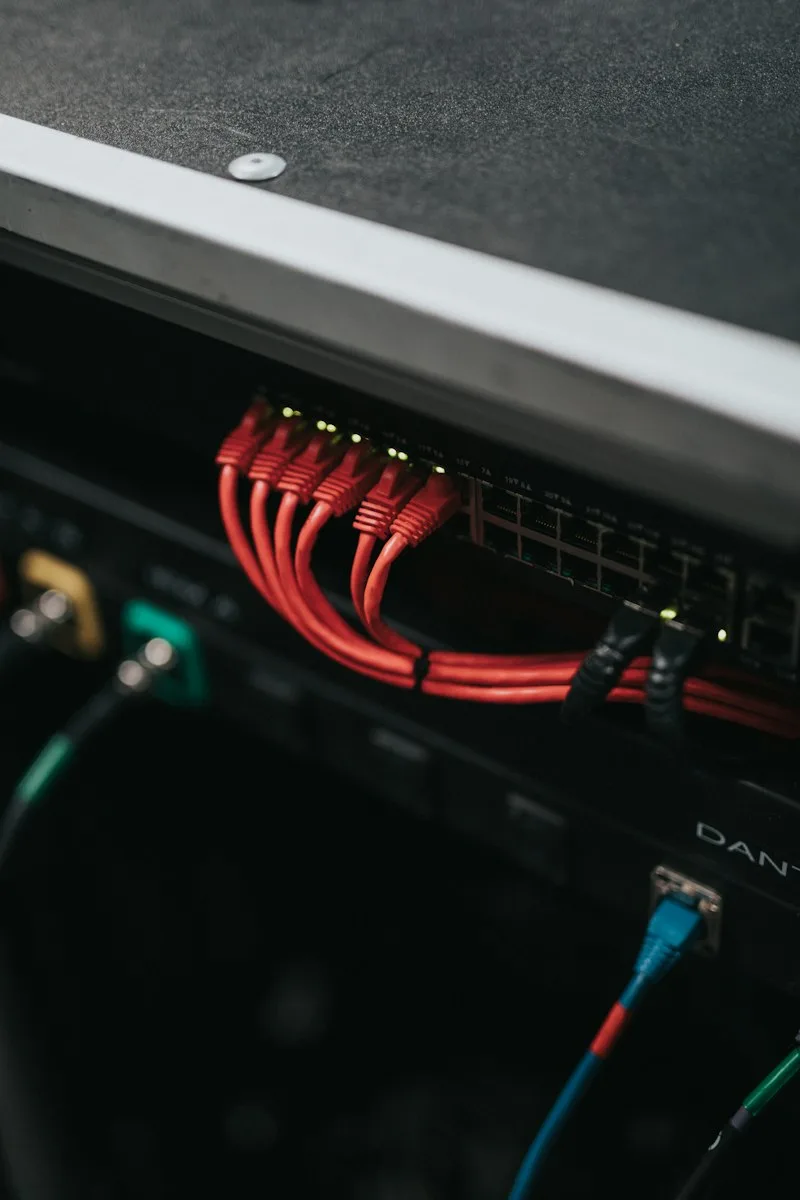 Demo · 02
Structured cabling and patch-panel organization
Demo · 02
Structured cabling and patch-panel organization
 Demo · 03
Equipment installation in the core data center
Demo · 03
Equipment installation in the core data center
 Demo · 04
Equipment commissioning and power-on testing
Demo · 04
Equipment commissioning and power-on testing
 Demo · 05
Data-center hot and cold aisles
Demo · 05
Data-center hot and cold aisles
 Demo · 06
Network cutover window · coordinated night work
Demo · 06
Network cutover window · coordinated night work
 Demo · 07
Bulk endpoint deployment and baseline rollout
Demo · 07
Bulk endpoint deployment and baseline rollout
 Demo · 08
IT project delivery review
Demo · 08
IT project delivery review
Service levels and response scope
The P1–P4 tiers below illustrate common incident coordination. First response, recovery targets, escalation and on-site handling are confirmed against the site scope, service window and contract.
| Severity | Typical scenarios | First response (contract) | Recovery target (contract) | Escalation process | Handling approach |
|---|---|---|---|---|---|
| P1 Critical | Core business services are down and production systems are unavailable | As agreed in the contract | As agreed in the contract | Escalate to the client owner and project manager as agreed in the contract | Arrange remote or on-site response as agreed in the contract |
| P2 High | Key functions impaired, some users affected, or performance severely degraded | As agreed in the contract | As agreed in the contract | Escalate to the service manager as agreed in the contract | Arrange remote or on-site response as agreed in the contract |
| P3 Moderate | A non-critical system issue, single-endpoint incident or peripheral failure | As agreed in the contract | As agreed in the contract | Include in operations reports as agreed in the contract | Arrange remote or on-site support as agreed in the contract |
| P4 Inquiry | Request support, access, software installation or configuration changes | As agreed in the contract | As agreed in the contract | Retain ticket records as agreed in the contract | Receive requests through the agreed channel |
Six common questions before engagement
We already have an in-house IT team. Could outsourcing create conflicts over responsibilities?
Is support on-site or remote? Can the two be combined?
How long does it take to take over an unfamiliar environment, and who manages risk during the transition?
How can we verify that inspections and changes actually took place?
Can we confirm that the disaster recovery environment will work during a failover?
How is pricing calculated? Can we start with a small scope?

Start with an IT operations assessment,
Then decide whether to outsource
This page does not submit information. Use the phone number or contact page to describe your servers, network, endpoints, business systems and site arrangements. A Yuqi consultant can then confirm whether further assessment is needed. Deliverables and fees follow the agreed project scope.