
Surveillance systems
States, links and faults across cameras, recorders, storage and management platforms.
Low-voltage and intelligent systems / Maintenance services
When surveillance, networking, access, meetings, displays or cabling fails, businesses need a documented path from reporting and authorized diagnosis to repair, validation and records, not an unrecorded temporary fix.
Maintenance records what happened, who confirmed it and what happens next, rather than merely clearing a fault.
01Define the systems being maintained
Site faults often span devices, links, platforms and permissions. Replacing one device may move the problem downstream; recording only 'restored' forces the next engineer to guess again.
Within authorization, Yuqi Intelligent starts with current conditions, impact and connections, coordinating Structured Cabling, networking or specialists as needed, then hands repairs, testing and records back to users. Support for important meetings or launches can be coordinated with Auditorium and Meeting Systems according to the site's scope.
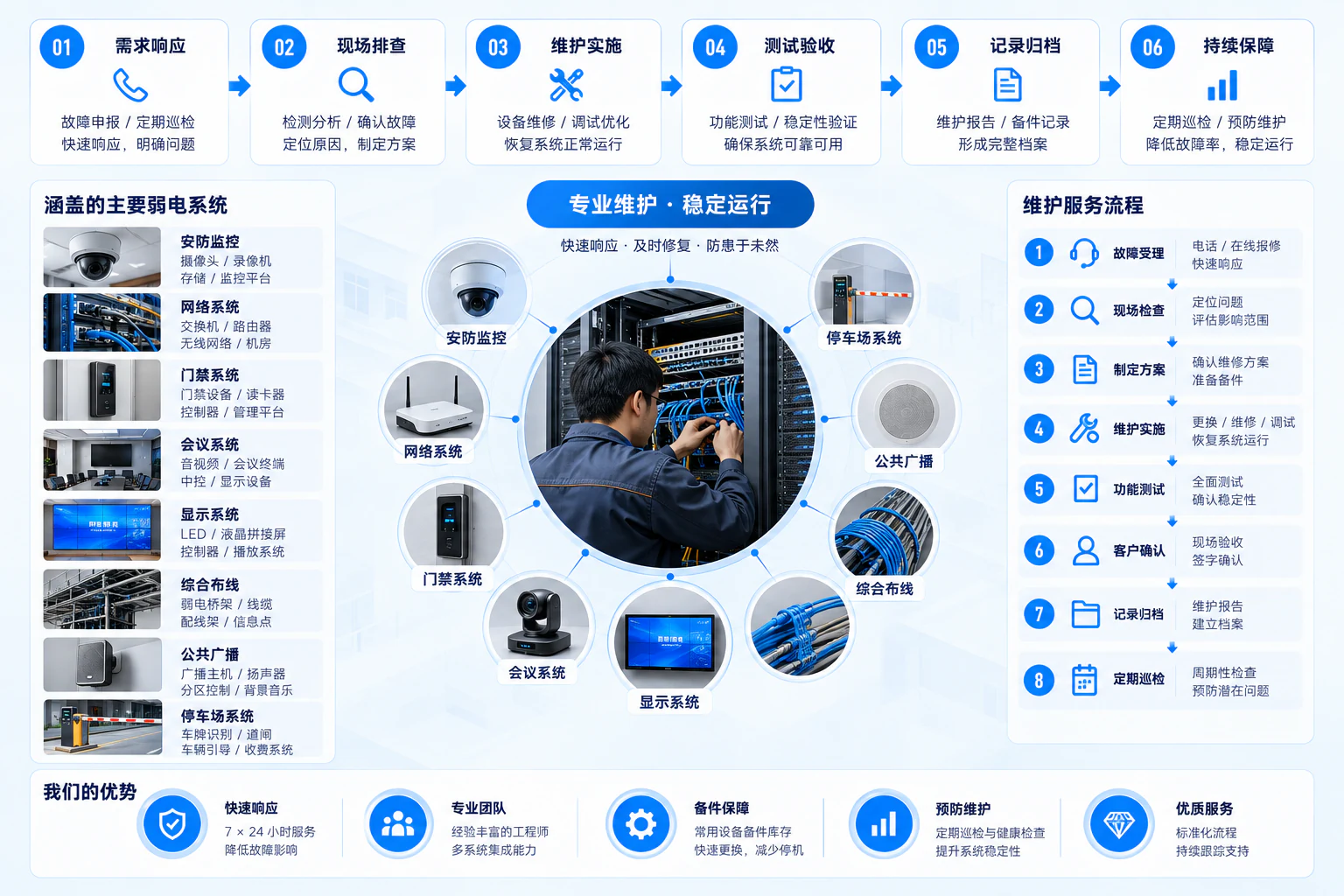
States, links and faults across cameras, recorders, storage and management platforms.
Switches, routers, wireless networks, equipment-room links and port configuration.
Connections between access devices, readers, controllers and management platforms.
Meeting endpoints, audiovisual equipment, central controls and displays.
LED displays, LCD walls, signal processors and controls.
Low-voltage trays, cables, patch panels, outlets and labeling records.
02From fault report to the next inspection
Authorize, diagnose, repair and verify issues, then carry conclusions and outstanding items into the inventory and next inspection. Animation illustrates the service sequence, not a fixed completion time for every fault.
Maintenance starts with a report or inspection, then authorized diagnosis, repair/replacement/configuration, integration testing and documentation, followed by the next inspection and preventive work.
03How Yuqi Intelligent helps
Inspections, diagnosis, scoped spare-part repair/replacement, configuration recovery, multi-system integration and event support all follow authorization, validation and documentation.
Check device state, links, accounts, alerts, labels and site conditions on schedule, recording the current baseline first.
Use reported symptoms, alerts and connections to distinguish equipment, configuration, links, platforms and external specialist conditions.
Repair/replace parts, restore configurations or adjust versions/parameters within authorization and contract; do not guarantee unverified capabilities.
Test interdependent meeting, display, access, surveillance and network systems. Support major events within agreed time windows and responsibilities.
04Maintenance handover
At completion, users should know what changed, what was tested, what remains and where the next inspection starts.
24/7 response, on-site coverage and spare stocks follow the contract. Coordinate fire-safety, electrical and other qualified work with responsible specialists.
Maintain asset, fault, configuration and test records together so the next engineer starts with known facts.
05Responsibility boundaries
Maintain surveillance, networking, access, meeting, display and cabling systems under site conditions, authorization and contract.
Coordinate fire-safety, power and other qualified work with responsible specialists. Yuqi Intelligent assists low-voltage integration and records only after interfaces are confirmed.
Response times, staffing, spares and replacement conditions follow the contract, not unconditional guarantees.
Follow site entry, safety, downtime, account and change-window requirements. Confirm rollback and decision owners before high-risk work.
06Frequently asked questions
Agreed surveillance, networking, access, meeting, display and cabling assets can receive inspections, diagnosis, repair, configuration and testing. Actual assets follow site and contract confirmation.
Not without a contract. Confirm response, staffing, spares and on-site support against system criticality, service windows, location and scope.
Such work requires coordination with the responsible qualified specialists. Yuqi Intelligent can assist low-voltage integration and documentation after confirming interfaces and responsibilities.
Deliver agreed asset inventories, fault/repair/replacement records, configuration changes, test reports, maintenance plans and responsibilities for use at the next inspection.
Next step / MAINTENANCE REVIEW
Share equipment scope, symptoms, impact period, inventories or the next event window to define diagnosis, repair, integration, testing and handover.