
An AI meeting summary is ready—why should a person still review it?
Many businesses now use AI meeting tools, such as Tencent Meeting's AI Assistant or Feishu Minutes, to transcribe a call and generate notes and action items afterward. This can save time, but some teams treat “accurate transcription” as “correct conclusions”: the summary is shared and tasks are assigned without a second review. AI is good at turning speech into organized text; it cannot decide whether a statement is correct or should be acted on. Before a summary enters a workflow, confirm its decisions, actions, owners and sensitive information.
Accurate transcription does not guarantee correct conclusions
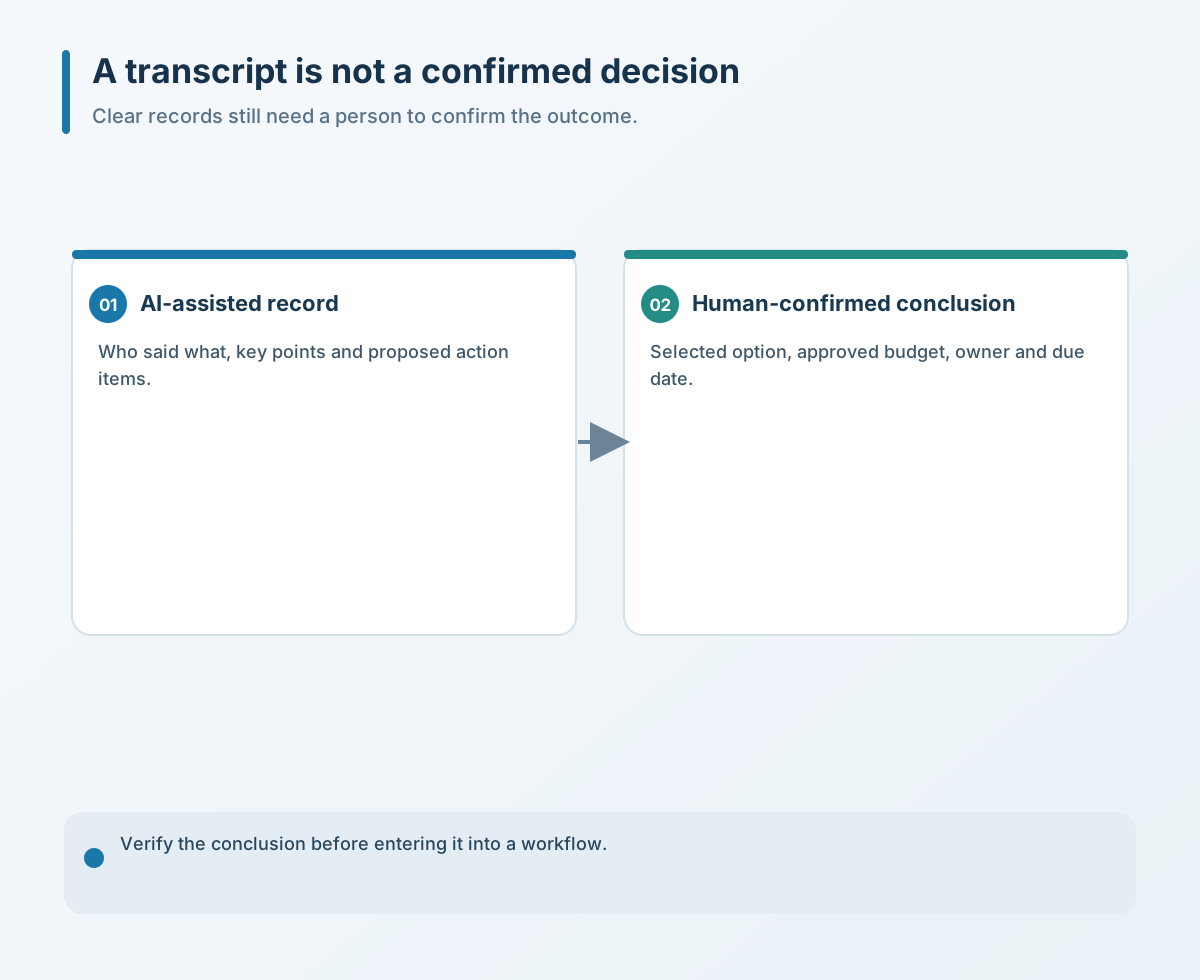
The value of an AI summary is faithful recording: making clear who said what and how far the discussion went. Tencent Meeting's AI Assistant uses meeting transcription and recordings to extract information and produce minutes; Feishu Minutes turns audio and video into searchable notes and organizes highlights. These features address the recording problem, and do so quickly.
What a business needs to retain, however, is the conclusion: which option was selected, whether a budget was approved, who takes the next step and when it is due. That depends on whether the discussion was clear and on the participants' business judgment—things the AI cannot know. A perfectly transcribed summary could still turn “hold for now” into “approved” or “Option A is an alternative” into “Option A is confirmed.” Accurate recording does not replace confirmation.
Reviewers should distinguish discussion, proposals, confirmed decisions, risks and action items. Keep open questions and any conditions attached to a decision visible; do not convert an unconfirmed statement into a task or commitment just because the summary presents it neatly.
Decide how the notes will be used. Are they an internal work reference, or will they be sent to a customer or supplier as a record? The use determines the review level. Internal notes may focus on actions and conclusions; an external version needs another check of numbers, names and wording because readers may treat it as a formal statement.
AI notes can faithfully preserve what a speaker got wrong or left unclear
Meetings often include imprecise statements: “probably,” “maybe” or “roughly”; a price mentioned offhand; or a person's name that sounds like a system name. AI transcription may preserve these words without correcting them.
The risk is not just a wording error. It can spread through the minutes: someone may prepare a quote from the wrong number, or chase the wrong owner because a name was misheard. The transcription tool is responsible for capturing speech; people are responsible for confirming meaning. The more formal the minutes look, the more likely they are to be treated as an instruction—and the more important this review becomes.
People need to confirm actions and owners one by one
AI notes often organize actions by who will do what and when. That can look clear even when a meeting statement such as “follow up next week” leaves open who will follow up, how far they should take it and when to report back. Ambiguity is greater across teams: which group will “support us,” and what does support include? Without confirmation, the task can be missed.
Reviewing each action is straightforward: confirm that the named owner accepts it, the completion criteria are clear and the deadline is reasonable. A task without an owner is still unassigned even if it appears in the notes. This is what turns minutes into a work record: only actions confirmed by the people responsible should move into the task system and performance process.
Keep the recording or transcript, draft, reviewer corrections and approved version linked, with the distribution scope recorded. That gives later reviewers a way to see how the final wording was reached without treating every draft sentence as an agreed instruction.
Sensitive information needs a second review too
Meetings may include information that should not spread with the minutes: customer names and prices, personal employee information, unpublished decisions or internal assessments. AI will organize what it hears; it will not decide what may be written down or who should receive it.
Before distribution, review customer and contract details for scope, remove personal information where needed, separate internal discussion from formal conclusions, and set boundaries for different versions. It is safer to share less first than to circulate an unsuitable statement. The Chinese rules cited below also call for labeling and retaining records for AI-generated or AI-assisted content; doing so supports external compliance and clear internal accountability.
Define who can access recordings, transcripts and approved minutes, and how long each is retained. If notes will create tasks or be sent outside the company, require confirmation of the underlying decision and recipient list first.
Set a four-step review process
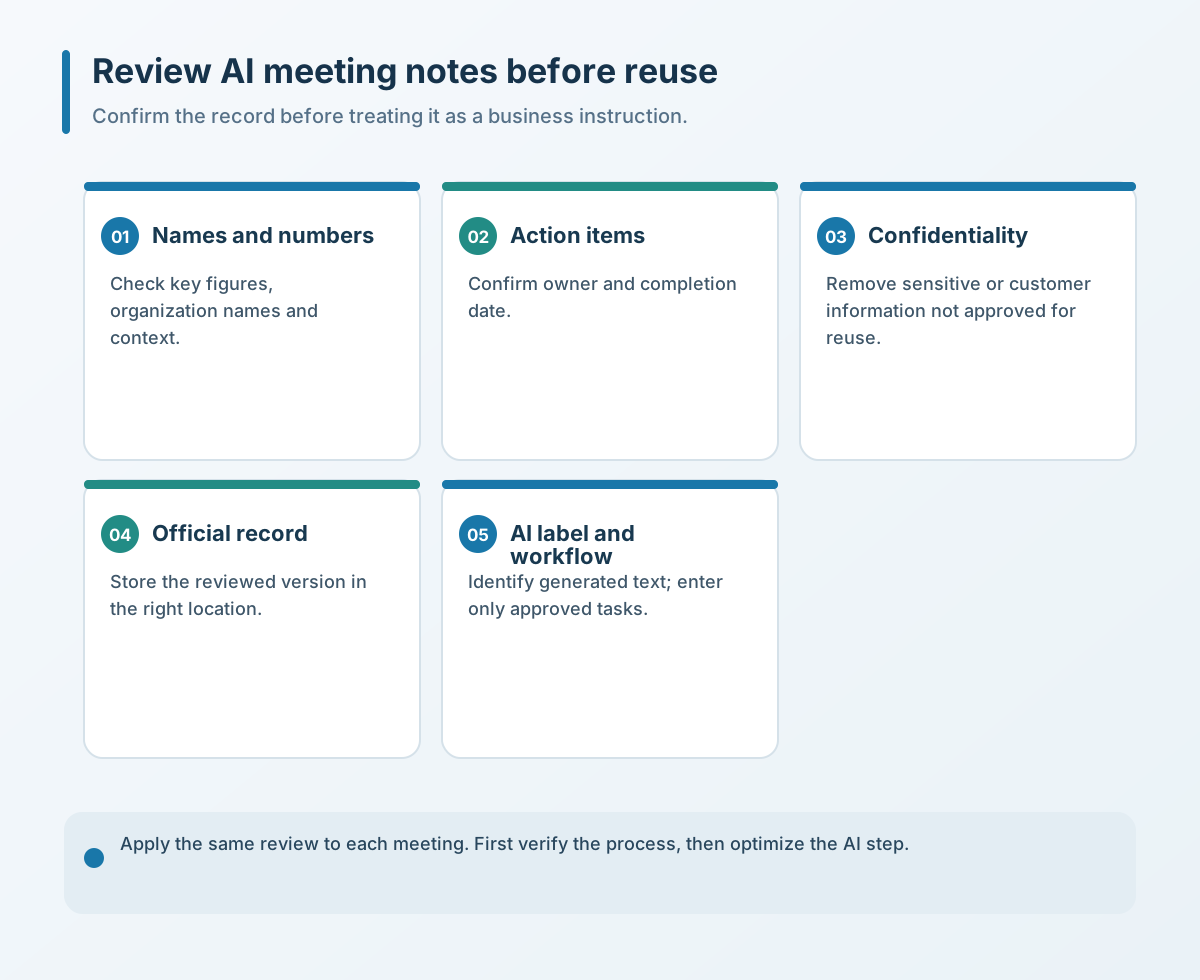
- Check key numbers and names first. Compare amounts, dates, people and system names with the recording or meeting notes, and correct discrepancies.
- Confirm the three parts of each action. The owner, completion criteria and deadline should be confirmed by the person responsible. List unconfirmed items separately.
- Filter sensitive content before sharing. Handle customer details, personal information and internal discussion separately; decide who should see each version.
- Retain the approved version. Archive the confirmed minutes as a work record, apply the required AI-content label and keep enough information for later review.
AI meeting notes should save time spent recording and organizing, not time spent understanding and confirming. A fixed review process can turn them from a convenience into a reliable work record. The more a business treats minutes as formal instructions, the more valuable human review becomes. Set the checks first, then let AI organize meetings faster—not the other way around.
If you need to review meeting notes, task follow-up or approval workflows, contact Yuqi Intelligent to assess the current meeting tools, record practices and ownership boundaries.