

AI can generate a quote—but why can the price still be wrong? Lock down price lists, calculation rules and approvers first
Many businesses want AI to prepare quotes: sales enters a customer's requirements, the system identifies products, fills in quantities, calculates tax and generates a Word or PDF file. A demo can produce a document in minutes, which looks much faster than copying fields by hand.
In production, another set of problems can appear: a product has multiple prices, units such as case and piece are mixed, discounts are applied in a different order, an old price list is still used, or a salesperson changes an amount without recording why. A model's ability to understand a request and fill in a form does not make it accountable for a formal price. Quoting automation is not about letting a model freely calculate prices; it is about fixing the price-list version, deterministic calculations, exception conditions and approval ownership, then using AI for extraction, matching and draft preparation.
AI can organize inputs; it should not guess the formal price
Quoting involves two kinds of work. The first is extracting a customer, product, quantity, delivery date and notes from email, chat or a requirements brief. The second is applying company rules for unit conversion, discounts, tax, freight, validity and approval conditions.
AI can help interpret inconsistent wording and populate a template. Monetary calculations, tax formulas and approval thresholds are better handled by traceable rules or code. A model's output is uncertain; without enough context, the same natural-language request can have more than one interpretation. Asking it to “fill in a reasonable price” without a source version or business conditions is a source of quoting risk.
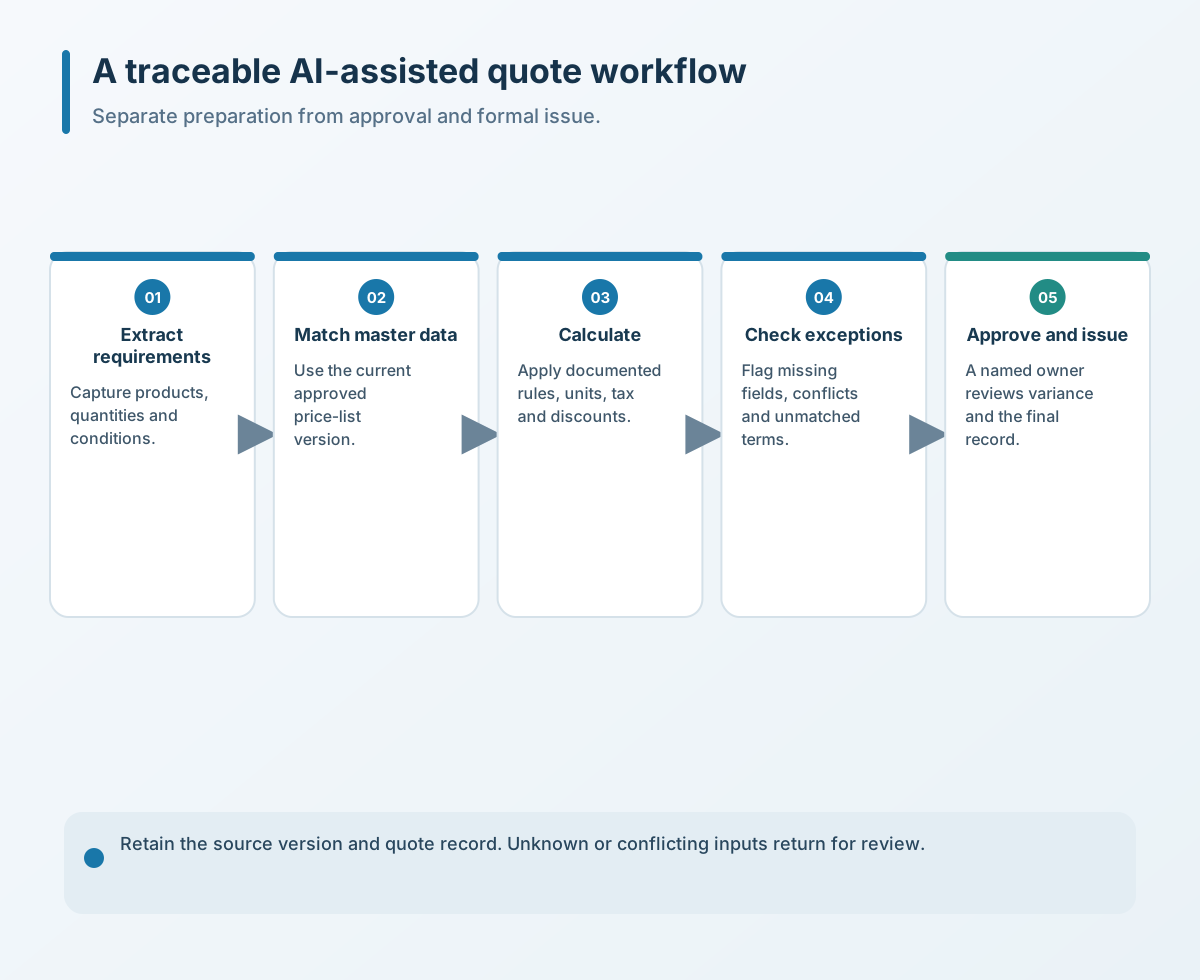
A safer division of work is for AI to extract and suggest a match, a rules engine or formula to perform deterministic calculations, and a responsible person to review exceptions and authorize the formal send. This will not eliminate every error, but it makes it possible to trace each number to its source, identify the rule that applied and see who made the final decision. Keep the original request, extracted fields, customer and product identifiers, price-list version, calculation result, exceptions, reviewer and approval together.
Turn scattered price files into managed master data
Many businesses do not have one price list. Sales may have an old Excel file, a group chat may contain a temporary version, purchase costs may live in another system and some customers may have contract prices. If automation reads all of them at once, it will reproduce version conflicts faster.
ISO 8000-100:2016 frames master-data quality in terms of data elements, system exchange interfaces and organizational responsibilities. For a quoting workflow, define at least a product code, name, specification, pricing unit, standard price, currency, tax status, effective and expiry dates, conditions for customer-specific pricing and a data owner.
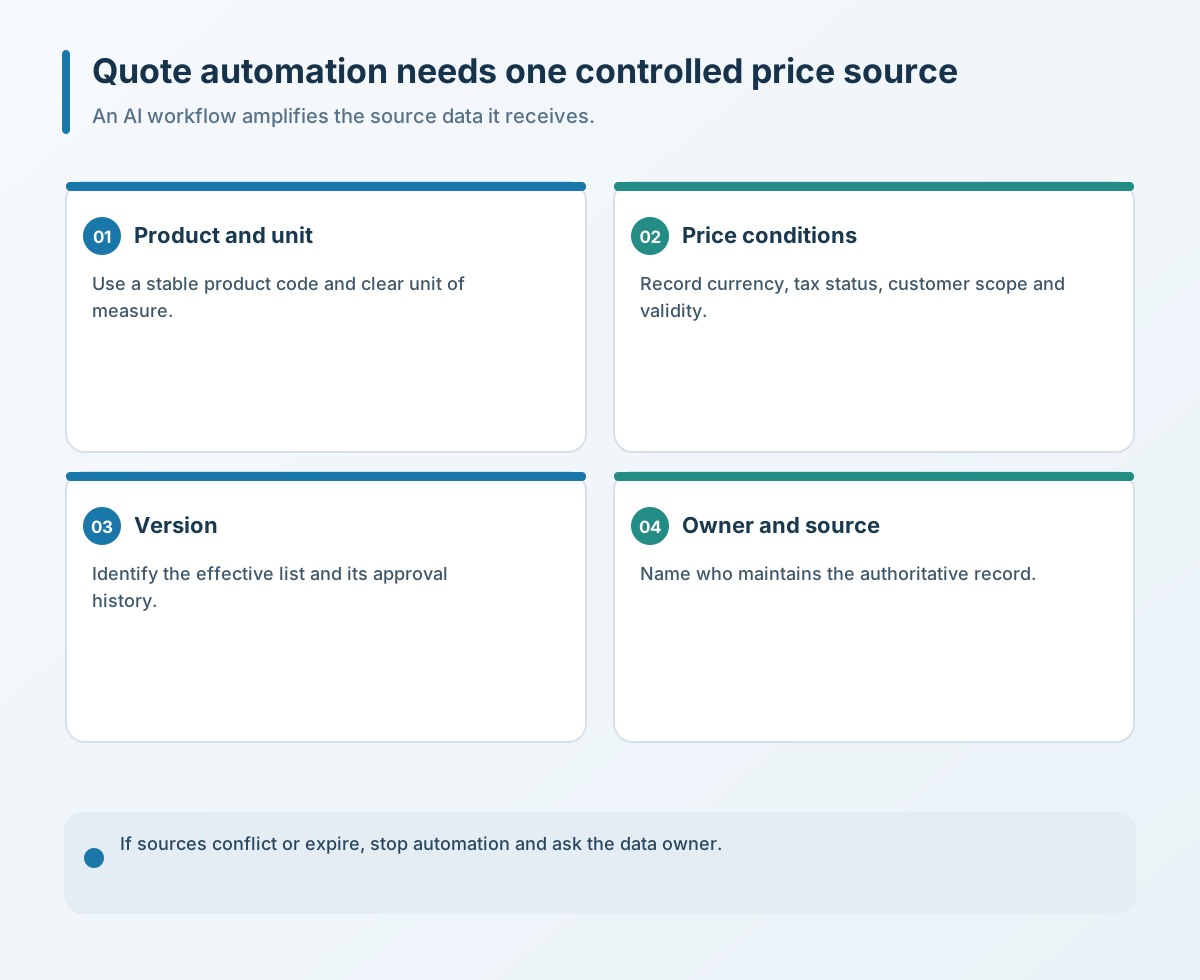
Every formal price should have one explainable current source. Keep historical versions for traceability, but do not mix them with the effective version in a default query. Record the scope and expiry of emergency or one-time quotes instead of relying on a salesperson to remember that “this one is special.”
Make calculation rules deterministic and exceptions explicit
A quote can be wrong even when the unit price is correct. Unit conversion, quantity tiers, discount order, tax, rounding, freight, minimum order quantity and validity can all change the final amount. If these rules exist only as employee experience, AI can only guess from scattered examples.
Break rules into testable parts: what the input is, which field is used, the calculation order, which conditions apply, how many decimal places to retain, and whether an exception should stop the process or go for approval. Version every rule change, assign an owner and effective date, and prepare test examples.
Do not ask a generative model to own every calculation. It can interpret a request and suggest candidate products; deterministic formulas should recalculate formal amounts and flag blanks, unknown products, unit conflicts, expired prices, unusual discounts, margin limits and changes to the total. Define an authoritative customer agreement and price-list version. If required information or a trustworthy source is missing, stop and ask the owner—not fill a gap or issue a polished document automatically.
Human approval is an accountability boundary, not duplicate work
The NIST AI RMF Core calls for organizations to define roles and oversight for people working with AI, document its knowledge limits and how outputs are used, and maintain human oversight. The framework also calls for testing before deployment, followed by ongoing monitoring and records.
For quotes, an approver should be able to see the customer and project, price-list version, products and quantities, units, discounts, tax, exceptions, before-and-after changes and who initiated the quote. A standard low-risk quote under stable rules may have a simpler review after validation. A price below the floor, a temporary price, unit conflict or high-value quote should follow a clearer confirmation path.
Approval should not end with a single “agree” button. Record the reason for a change, approver, time, final document version and send status. If a quote is canceled, a template changes or customer terms change, the business can then trace why that number was issued.
Test against real-world edge cases before launch
Automation demos often use complete fields and consistent units. Real work includes products with similar names, missing specifications, quantities buried in notes, last-minute customer changes and old files forwarded from one person to another.
NIST AI RMF's measurement and management guidance emphasizes testing near deployment conditions, recording results and monitoring the system over time. Start with redacted historical examples covering normal cases, missing fields, duplicate products, unit conflicts, expired prices, excessive discounts and canceled-and-reopened quotes. Compare results with what the responsible person expects. When problems appear, determine whether the cause is data, rules, prompts, permissions or process; asking the model to “be smarter” is not a diagnosis. Track field accuracy, calculation differences, exception rates, reviewer corrections and turnaround time before expanding.
Four preparations to complete first
- Choose one price source. Standardize product codes, units, prices, currency, tax status, effective period and ownership. Keep old versions for reference only.
- Document the calculation rules. Fix the logic for discounts, tax, rounding, freight, minimum orders and validity; prepare test examples for each rule.
- Define stop and approval conditions. Do not auto-fill expired prices, missing fields, unit conflicts, unusual discounts or unmatched items. Name the person who resolves them.
- Run a small dual-track validation. Generate drafts while retaining human checks. Record error types, change reasons and final versions before expanding use.
The time saved by AI quoting should not come from letting a model guess a formal price. It should come from organizing requirements, matching fields, generating templates and reducing repetitive checks. Until master data, rules and approvals are clear, automation can send mistakes into formal documents faster and more neatly.
If you need to review product master data, pricing rules, exception approvals or document generation, contact Yuqi Intelligent to start with existing spreadsheet templates and ownership boundaries.