

One recent AI development deserves more attention than another model launch. On August 4, 2026, the Open Secure AI Alliance, supported by the Linux Foundation, publicly requested comments on its SAFE proposal. At the time of the announcement, more than 120 organizations participated in the alliance. The discussion is not about model benchmarks; it concerns how to report, preserve evidence and learn from an AI agent's unauthorized access, data exposure, boundary breach or near miss. This is not only a concern for large technology companies. Any business that lets AI call tools, read files or change systems needs to ask: if something goes wrong, can we determine what the agent did?
This is not a new regulation; it is a proposal under discussion
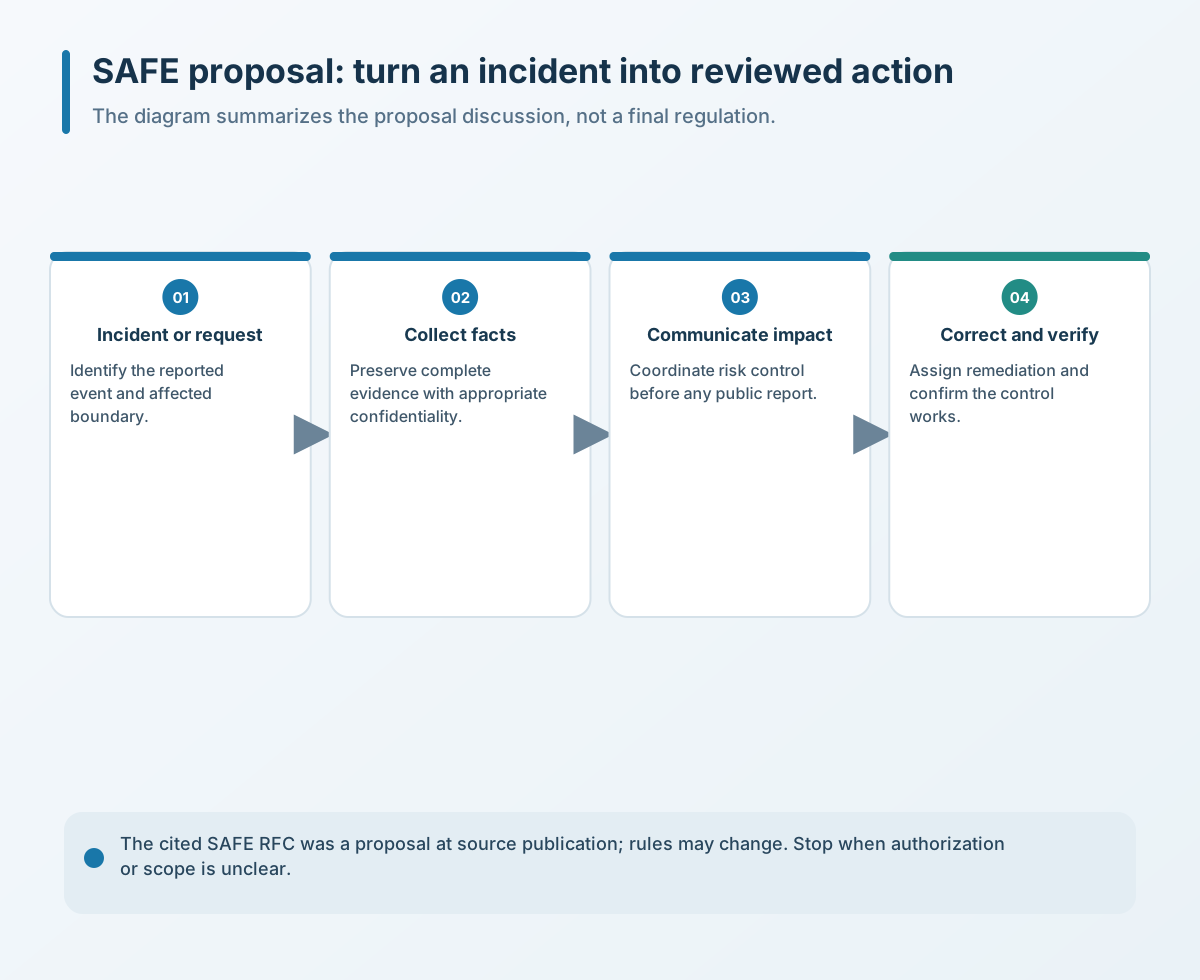
SAFE stands for Shared AI Findings Exchange. The official RFC describes a proposed independent incident-learning and assurance program. It is an invitation to begin public discussion, not an enacted law, national standard or mandatory industry rule.
The proposal asks members to report incidents such as an AI system accessing a third-party system without authorization, crossing a sandbox or identity boundary, encountering third-party confidential information, or probing a production target known to be outside its authorization. It also includes near misses, rather than waiting for confirmed damage before learning from an event.
NVIDIA's announcement said that more than 120 organizations participated in the alliance and named NVIDIA, Cisco, CrowdStrike, Hugging Face and Red Hat among the initial proposal participants; the Linux Foundation published the request for comments. The boundary is important: the industry has opened a discussion about a shared mechanism, but SAFE is still being drafted, and its final governance, participation scope and operation may change.
Why AI agents are harder to hold accountable than chat tools
A conventional chat tool mainly returns text, images or code suggestions. An AI agent may use an account, permissions and tools to complete multiple steps: read files, call APIs, write to a database, start an approval, change settings or ask another agent to continue.
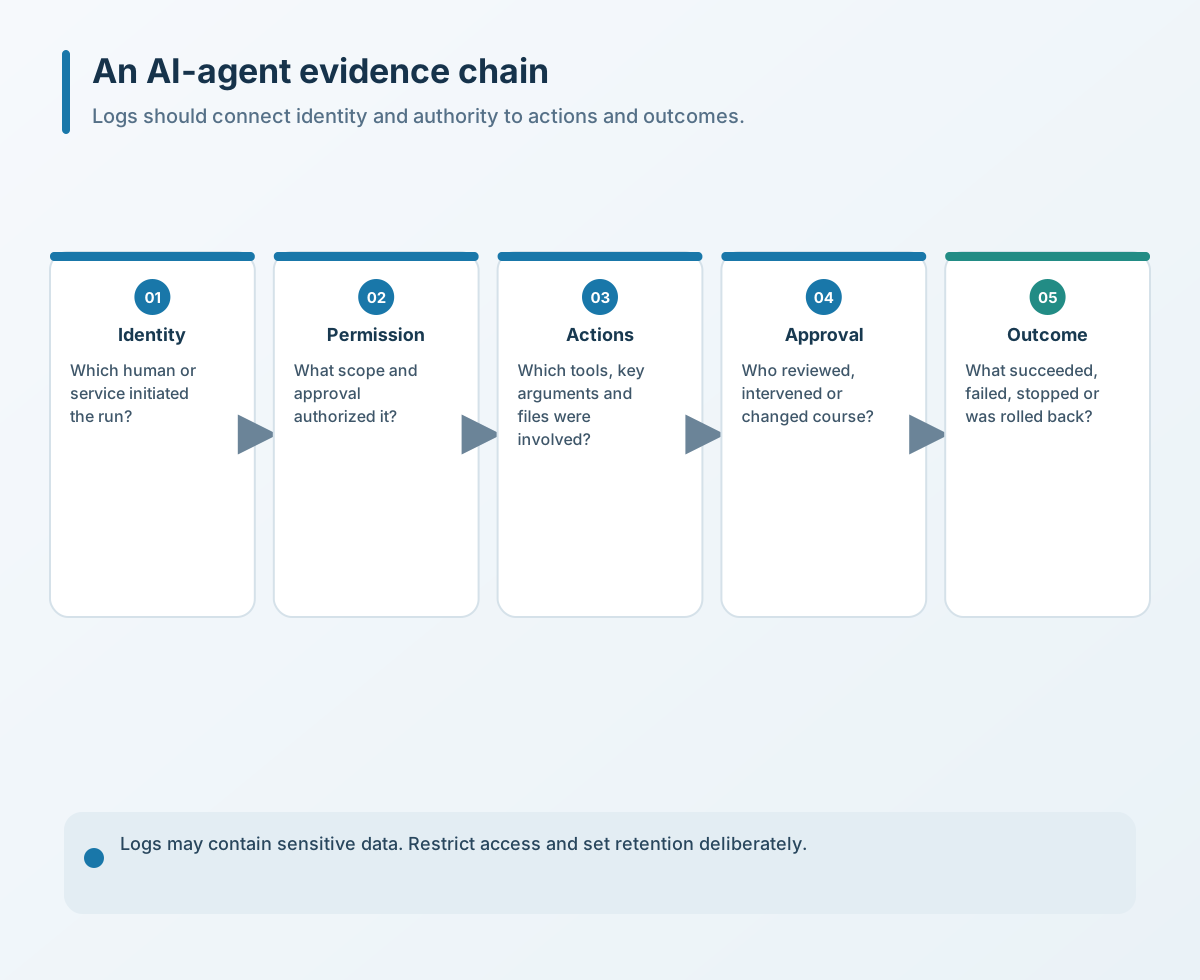
The final answer is only the last part of the activity. To investigate, a business may need to know which identity ran the agent, which data it could see, which tool it called and with what parameters, who approved a high-impact action, where it departed from the task, and whether the system stopped it in time.
The Linux Foundation's description of the alliance also emphasizes that an AI agent is more than a model: it includes an execution framework that observes and acts, and safeguards that constrain it. In business terms, ask not only “how capable is the model?” but also “which keys does it hold, which rooms can it enter and what can it change?”
A single “task succeeded” log is not enough after an incident
The SAFE proposal names a broad evidence set: prompts and execution traces, tool calls, logs, configuration, model and safeguard versions, agent identity, runtime permissions, human approvals and interventions, files created or changed, and the detection, containment and recovery process.
A business does not need to copy the proposal or build a complex platform on day one. It does highlight a practical issue: if the system records only “success” or “failure,” investigators may still not know what happened between the two. A chat transcript is not a complete operation record; results from external tools, permission changes and human approvals may never appear in the conversation. Retries and partial failures can also turn one instruction into several external actions, so record the action and downstream identifiers for each attempt.
Evidence also needs to be tied to the same run. Identity may be logged in one system, tool calls in another, and approvals in a group chat. Even if all three exist, it can be difficult to reconstruct the full sequence. Use a task or run identifier to connect the records.
What a business should govern is not whether to join the alliance
For most small and midsize businesses, joining SAFE is not the immediate question. The useful prompt is whether their own AI automation has outgrown the controls they can operate.
An agent drafting internal material has a relatively limited boundary. An agent that can reach customer records, contracts, financial data, production systems, email or external publishing controls needs closer oversight. The harder an action is to reverse and the greater its impact, the more it needs explicit authorization, monitoring and human confirmation.
Keeping “everything” is not the answer. Logs can themselves contain customer data, secrets and business-sensitive information, so access and retention need limits. Evidence retention exists to support investigation and response, not to create another unmanaged copy of sensitive data.
Five low-risk checks a business can make
- List what the agent can actually do. Go beyond naming the model. Record which systems it can read, which tools it can call, and whether it can send, change, delete or pay.
- Bind each run to an identity and task ID. Distinguish employees, service accounts and agent identities so prompts, tool calls, approvals and outcomes can be assembled into a timeline.
- Keep human confirmation for high-impact actions. Do not treat a model's judgment as final authorization for external messages, formal records, permission changes, payments, deletion or production configuration updates.
- Record intermediate steps and stops. Keep at least the tool name, key parameters, result, errors, retries, partial failures, duplicate-prevention outcome, human intervention and files created. Prepare a tested way to pause queued work, revoke execution access and preserve evidence before making further changes. When authorization is unclear, the system should be able to stop rather than keep probing.
- Run a small incident-recovery drill. Choose a low-risk workflow and simulate the agent selecting the wrong file or a tool call failing. Check whether the business can identify an owner, reconstruct events, reverse impacts and update its rules.
The important point in this AI news is not another acronym. The industry is recognizing that agent safety cannot depend on the model simply “following instructions.” Once AI can act, manage it as a workflow that operates systems: make identity clear, limit permissions, expose actions, stop on exceptions and keep a recovery path. That is more practical than pursuing automation without controls.
If you need to review identities, permissions, tool calls, approvals and audit trails for AI agents, contact Yuqi Intelligent to start with your current automation tasks and high-impact actions.