
Do not reterminate the cable, replace the switch and change network settings at once. First map the failing wall outlet to the patch-panel and switch ports. Record the drop time, negotiated link speed and port events, then change one segment at a time. A known-good short cord that stops the drops points to the old cord or connector; a fault that remains on the fixed link calls for a cable test. A lit link LED is not evidence that the run qualifies for the target application or passes certification limits.
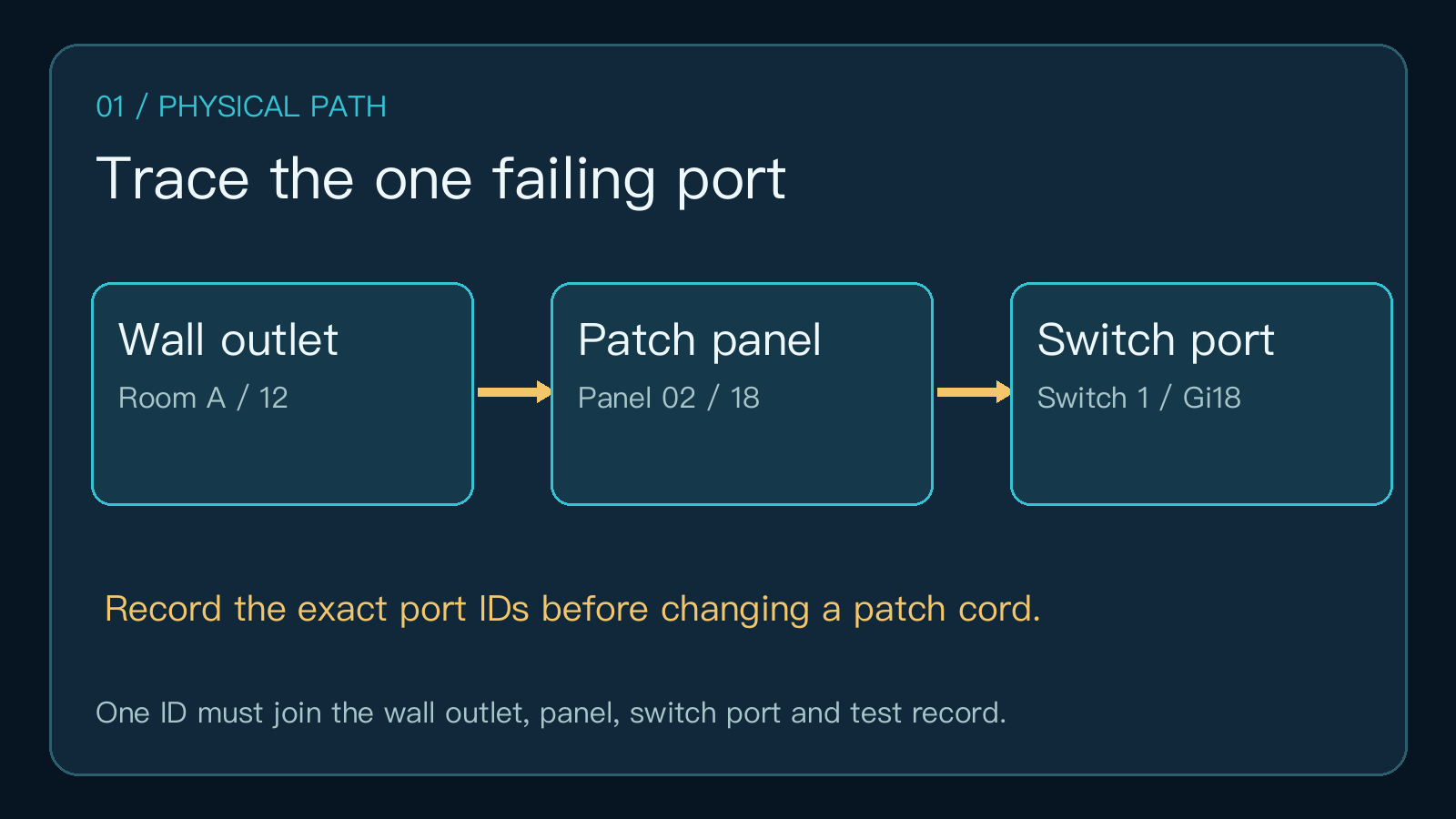
Identify the exact physical path
Record the endpoint, wall outlet, patch-panel port and switch port. The outlet label, cabinet label and test result should refer to the same link ID. Fluke Networks explains why work-area labels need to connect to panel and port identifiers and their original test records: otherwise the wrong run can be tested during a later fault. Fluke Networks cabling documentation.
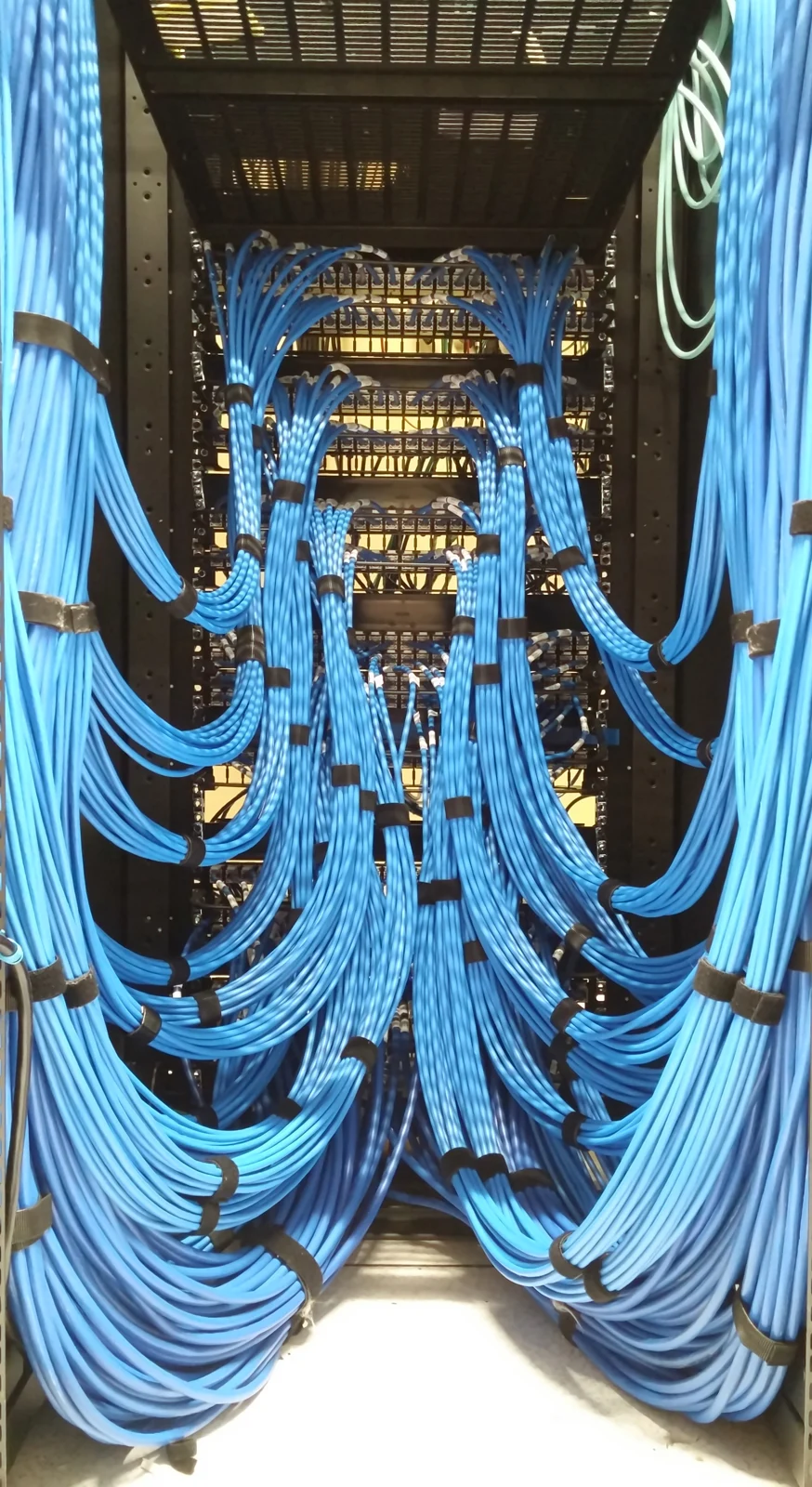
The real photo below shows the rear of a densely wired Ethernet patch panel. It explains why port mapping matters; it is neither a Yuqi customer site nor a photograph of the fault in this article. Photo by Kbh3rd, Wikimedia Commons, CC BY 4.0. The displayed copy was resized and stripped of camera metadata.

Isolate one segment at a time
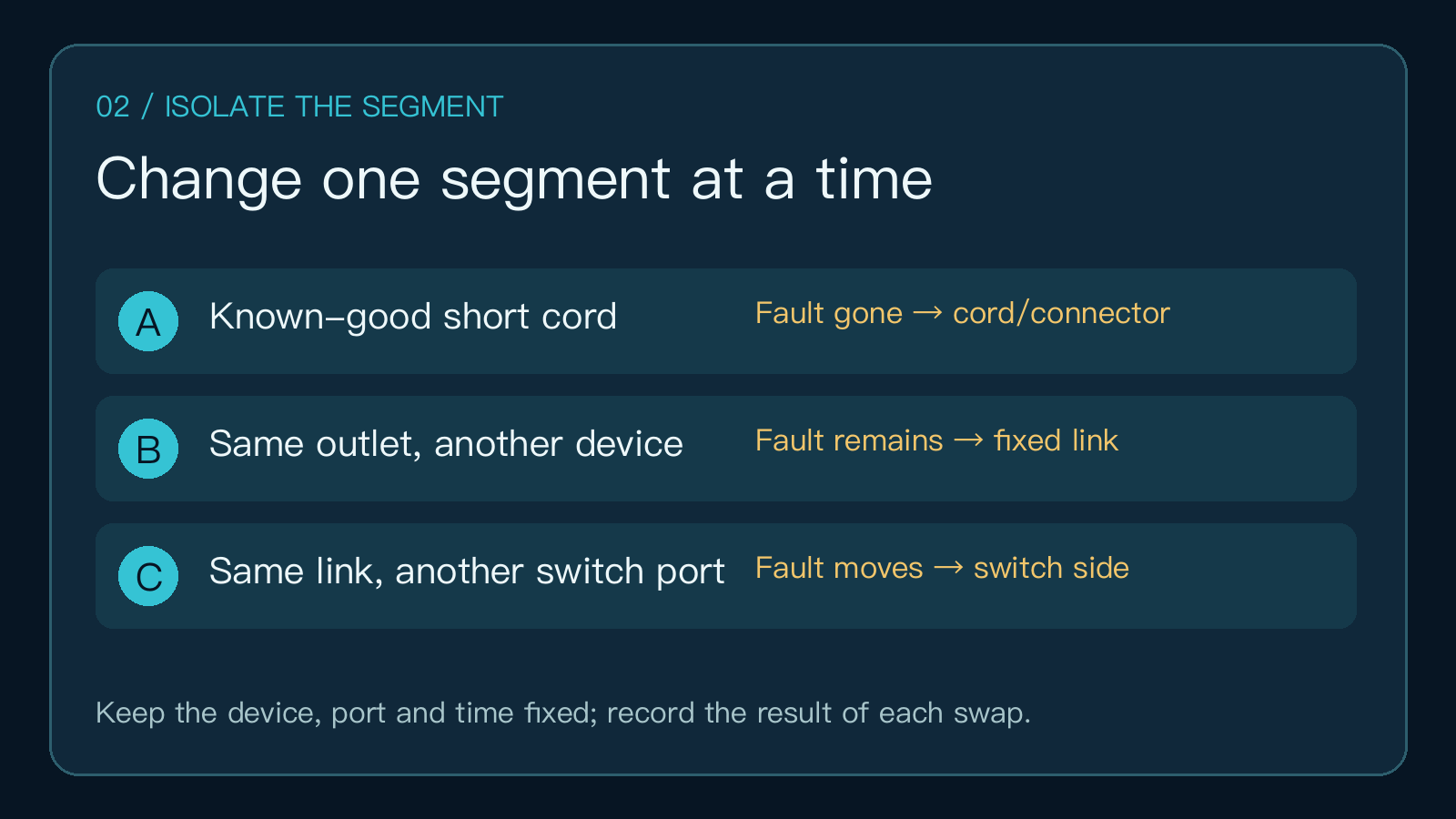
Keep the test device, outlet, intended switch port and observation window fixed. Record whether the drop persists after each change. A short period without a drop narrows the hypothesis; it does not prove long-term stability.
| One change | What it suggests | Follow-up |
|---|---|---|
| Replace the desk-side cord with a known-good one | Recovery points toward the old cord or plug | Retest and record both cord IDs |
| Try another endpoint at the same outlet | A continuing fault raises suspicion on the fixed link or upstream path | Check mapping and test the run |
| Move the same fixed link to a known-good switch port | A fault that follows the port points to the switch side | Inspect port events, speed and configuration |
These are diagnostic examples, not field measurements. Before moving a live connection, preserve the original patching and port configuration and use an approved maintenance window where needed.
What evidence is needed after the LED lights?
A link LED shows that devices established a link at that moment. A continuity check, qualification for a target application and certification against a selected cabling limit are different test levels. Fluke Networks distinguishes qualification from certification; if the handover requires proof against a cable category limit, use an appropriate certification tester and limit. Do not call a simple wiremap or link light a certified result. Fluke Networks test-level guidance.
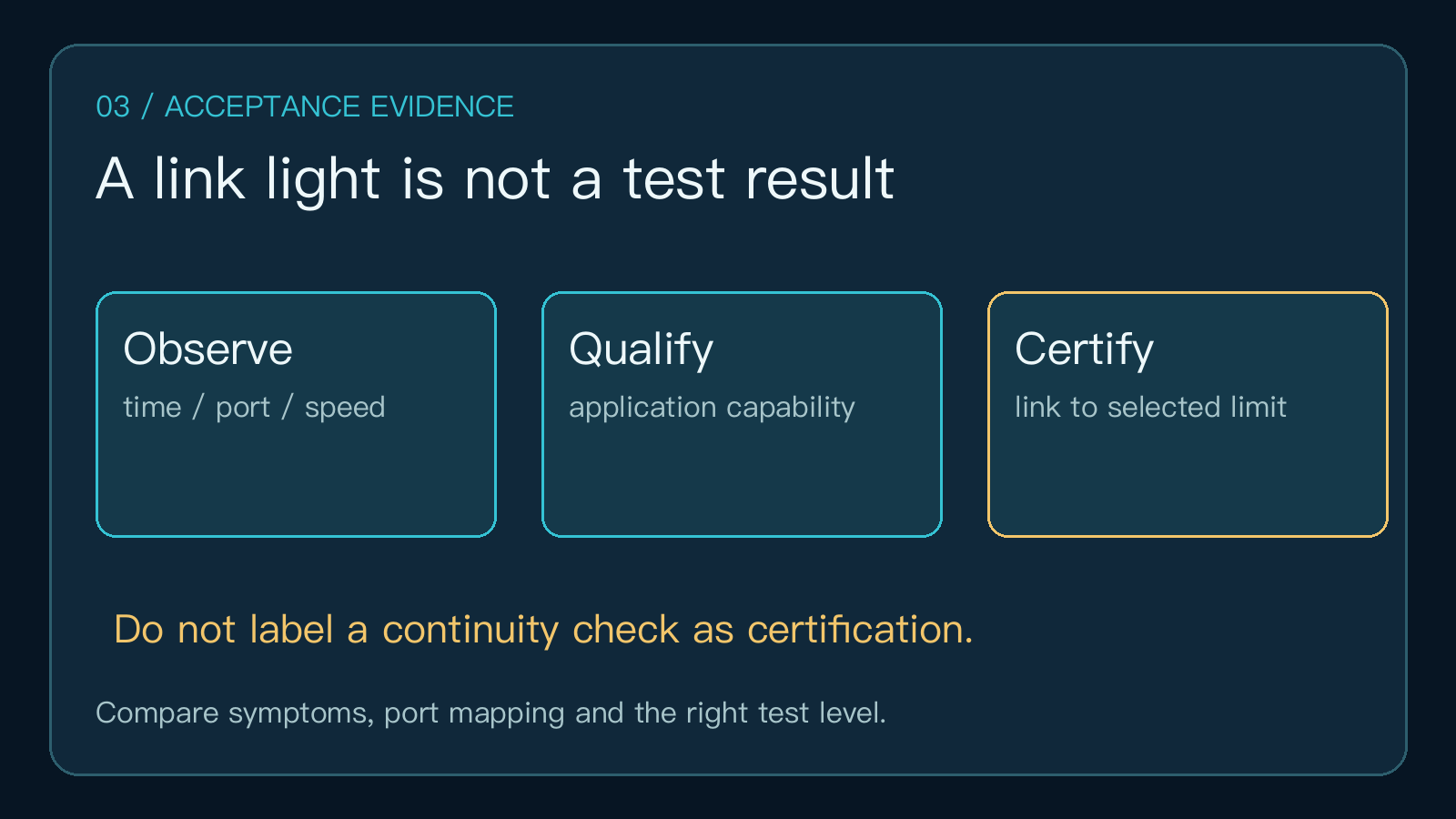
An acceptance record should contain the link ID, date, endpoint, switch port, negotiated speed, drop time, each substitution, test instrument and selected limit, result, and native report file. Certification data applies to that particular link and test conditions; it does not prove the endpoint, switch configuration or future uptime. Fluke Networks describes how native test data helps investigate connector and cable failures. Fluke Networks on original reports.
Related solution and next step
If several outlets drop, mappings are missing or installed links need agreed qualification or certification, gather the link map, switch-port events and existing test reports. Yuqi's System Integration service can review the physical path, port map and handover evidence within an agreed site scope and test level.
Related reading: office cabling test reports and handover. That article checks whether a report can support handover; this one isolates an active intermittent connection.
FAQ
A new patch cord stops the drops. Is the issue closed?
Record both cords, then observe the same endpoint, outlet, port and business period for recurrence. One recovery only narrows the suspected segment.
Why can a switch port light be on while users still disconnect?
The LED reflects a momentary link state. Port events, negotiated speed, error counters and segmented tests help distinguish cabling, termination and switch-side issues.
Does every outlet need certification testing?
That depends on the project acceptance requirement and fault objective. Start with mapping and appropriate qualification for routine diagnosis; agree a certification test and native report when proof against a selected cabling limit is required.