

Many server rooms already have a UPS. When its panel is lit and no alarm is showing, managers may assume that servers and network equipment will stay up through a power cut. Yet devices may shut down quickly, some may drop before others, services may not exit cleanly, or startup order may be confused when power returns.
The common misunderstanding is to treat a UPS as an “always-on guarantee.” It is better understood as a manageable buffer of time. Whether it protects business operations depends on the actual load, battery condition, how long power is needed and whether shutdown and recovery actions are defined.
Having a UPS does not mean equipment can run indefinitely
A UPS supplies battery power to connected equipment when utility power is abnormal, but the battery has finite energy. Eaton's selection guide explains that runtime varies with connected equipment power and generally falls as load rises. External battery modules can extend runtime for some models, but do not automatically increase the UPS's own power capacity.
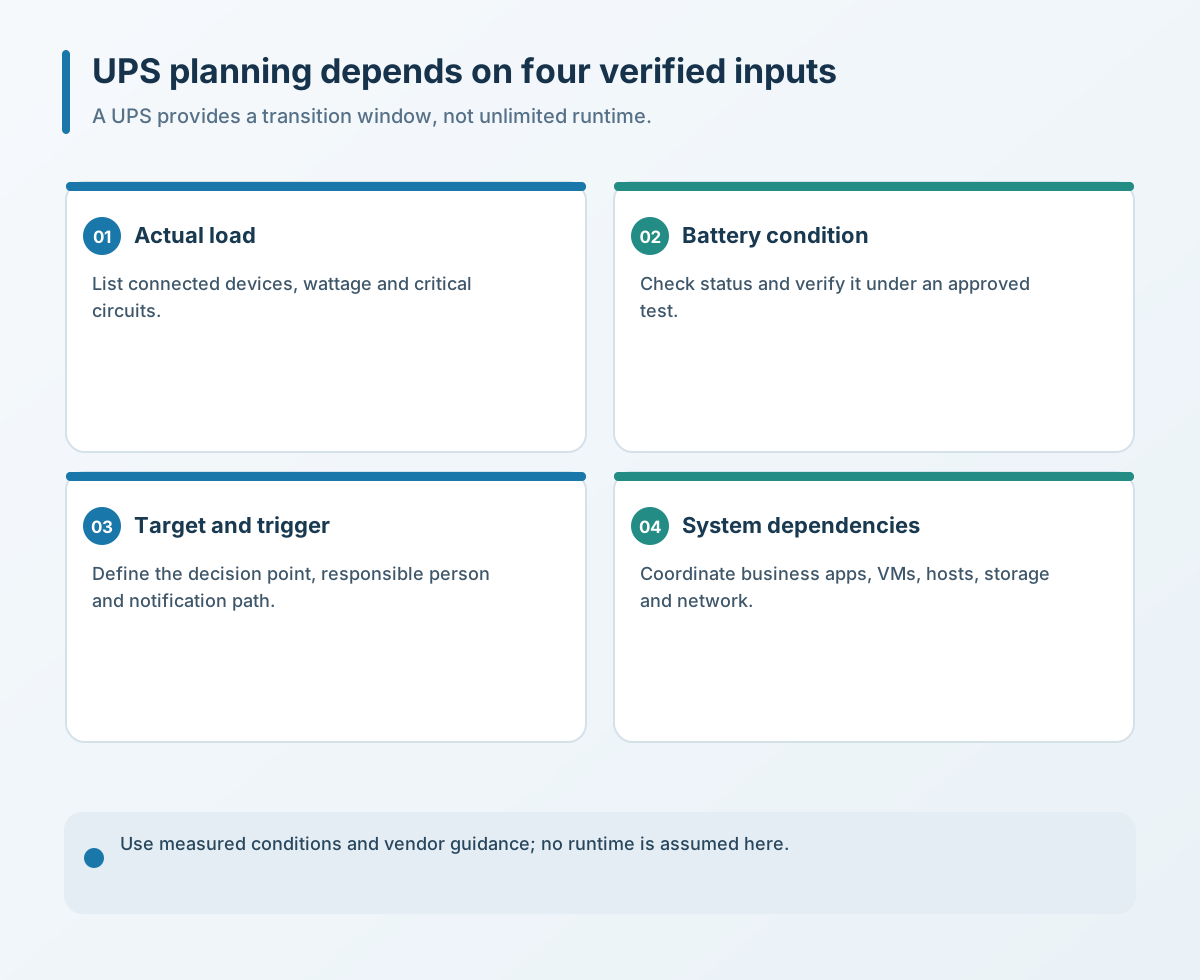
Start with measured power draw rather than rated capacity alone. Record equipment connected to each UPS, critical loads and the goal for an outage. Include the supporting cooling, network, storage, access-control and monitoring dependencies. The goal might be to wait for a generator or let virtual machines, databases, storage and servers shut down in a safe sequence; these goals call for different capacity, coordination and drills.
A normal-looking panel cannot verify battery capability
UPS batteries are affected by temperature, discharge cycles, storage and maintenance. Eaton's UPS fundamentals handbook notes that batteries have a finite service life and that environment, cycles and maintenance affect capacity. Schneider Electric's single-phase UPS lifecycle paper also treats battery and UPS maintenance as part of ongoing availability.
Start by checking commissioning and replacement dates, ambient temperature, alarms, self-test results and measured load. Treat a front-panel runtime estimate as one input, not proof of available shutdown time. Qualified personnel can then plan a controlled discharge or load test where appropriate. Set the interval according to battery type, manufacturer documentation, environment and business criticality; do not apply one age threshold to every installation.
Enough runtime can still fail because of shutdown order
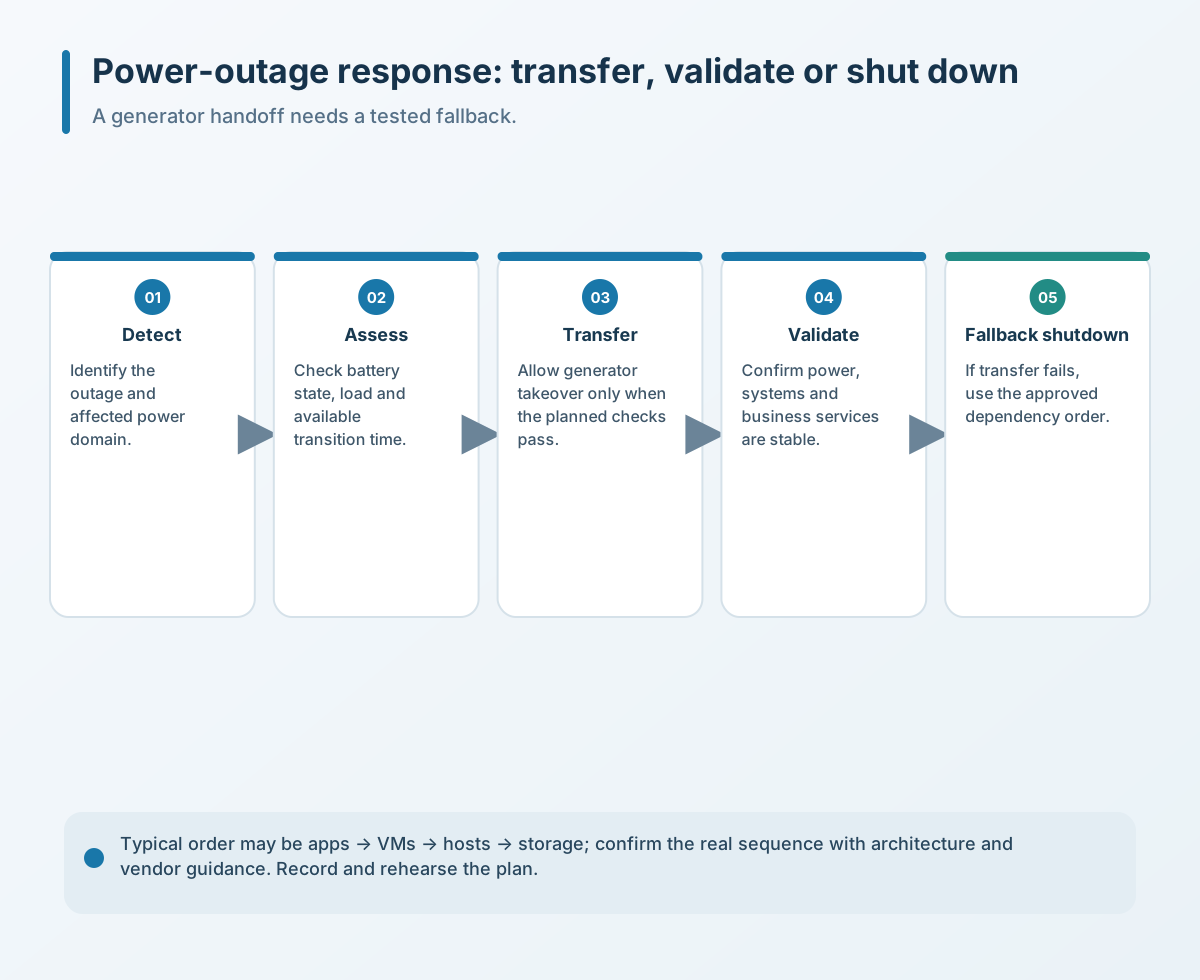
A business service may depend on virtual machines, which depend on a host, which in turn depends on shared storage. If network equipment or authentication services shut down first, later shutdown commands may not arrive. The outage procedure needs to reflect the actual architecture and define detection, notification, stopping writes, shutting down virtual machines and storage, and validating recovery.
Databases, virtualization platforms, storage and production equipment each have their own safe-shutdown requirements. Base the final procedure on equipment documentation, the system architecture and site validation—not a generic sequence.
Generator backup still needs a tested handoff
A UPS and generator are often combined: the UPS provides immediate short-term power while the generator supports a longer outage. The business still needs to verify generator start time, transfer method, compatibility with the UPS output, maintenance ownership and the shutdown decision if the generator does not take over.
Four checks a business can complete first
- List critical loads. Record each UPS's connected equipment, present load and business purpose. Identify equipment that should not share a critical power circuit.
- Define the outage objective. Decide whether the system should wait for a generator or provide enough time for safe shutdown; name the owner and trigger conditions.
- Complete battery records. Keep commissioning, replacement, self-test, alarm and maintenance records. Where runtime requirements are high, plan a controlled validation.
- Walk through and rehearse the procedure. First confirm alarms, notification, shutdown, startup, generator transfer and service checks on paper; then test in a low-risk window with named owners, stop conditions and rollback prepared, and update the plan.
The value of a UPS is not simply adding another device to the rack. It is giving the business time that can be managed. Connect load, battery, shutdown order and drills so an outage is more likely to become a planned degradation and recovery rather than a sudden stop.
If you need to review UPS load, server dependencies and outage recovery in a server room, contact Yuqi Intelligent to set priorities based on the equipment and the business services involved.